
Upfitting Basics
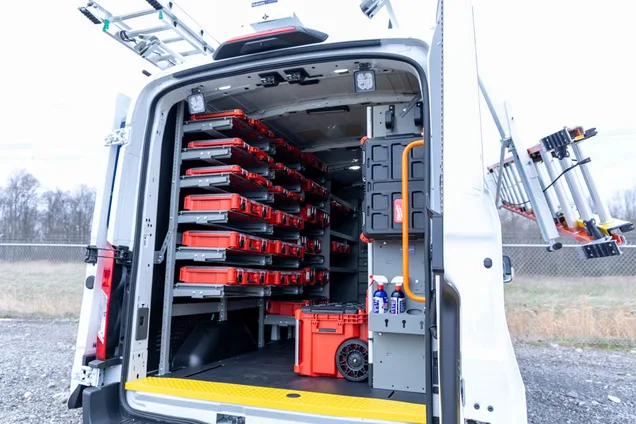
A cargo van rolls off the assembly line as an empty metal box. A pickup arrives with a bare bed. Neither is ready to earn a living — and that gap between "vehicle" and "work vehicle" is exactly what vehicle upfitting closes. If you've heard the term from a dealer, a fleet manager, or a fellow contractor and wondered what it actually covers, this guide is for you. We'll define upfitting, look at who relies on it, break down the major equipment categories, and walk through how a project comes together at our Omaha shop. Questions along the way? Ask our upfitting team anytime.
Vehicle upfitting is the process of equipping a stock vehicle with the storage, safety, and access equipment it needs to do a specific job. Manufacturers build vans and trucks to move people and cargo in general. Upfitting makes them purpose-built — a mobile electrician's shop, a secure delivery vehicle, a plumbing warehouse on wheels.
The scale varies enormously. An upfit might be:
What separates upfitting from tossing equipment in the back is intent: every component is selected for the work being done and installed so it stays put at highway speed and under hard braking.
At Revolution Upfitting, our full range of upfitting services covers both interior and exterior equipment, installed by our team in Omaha, NE with products from brands we carry, including Sortimo, Holman, WeatherGuard, Legend, and TruckVault.
Almost any business that puts tools, parts, or product on the road benefits from a purpose-built vehicle. The heaviest users fall into four groups:
Owner-operators fit in, too. A one-person business arguably feels the benefit most, because a single organized van does the work of a shop, a warehouse, and a rolling billboard for the brand painted on its side.
Interior equipment does its work where you spend your day — inside the cargo area. The major categories:
Shelving is the foundation of most van upfits. Modular systems from makers like Sortimo and Holman combine shelves, drawers, bins, and cases into a layout matched to your trade. We cover the options in depth on our van shelving systems page.
A vehicle partition separates the cab from the cargo area, shielding the driver from shifting loads and cutting noise and drafts. Partitions are fitted to specific vehicle models — our partition and bulkhead installations cover steel, aluminum, and composite options.
Floor, wall, and ceiling van liners protect the body from dents, gouges, and corrosion while making the cargo area easier to clean. Liners typically go in before shelving, which is why we plan them together — details on our van liner installations page.
Pickups get their own interior category: locking drawer systems, including TruckVault secure drawers, that organize tools and protect valuable gear. Explore the options on our truck bed storage page.
Exterior equipment extends what a vehicle can carry and makes it safer to use:
Exterior and interior choices interact. Moving ladders to the roof frees interior wall space for shelving; a roof rack may change which partition fits. Good upfitters plan the whole vehicle, not one product at a time.
Every shop has its own workflow, but a professional upfit generally follows the same arc:
The order matters. Liners before shelving, partitions coordinated with racks, wiring routed before walls close up. It's the reason experienced crews plan the entire upfit up front, even when they phase the installation over time.
One point of frequent confusion: upfitting is not the same as vehicle wraps or graphics. A wrap changes how the vehicle looks; an upfit changes what the vehicle can do. The two pair beautifully — a sharp exterior and an organized interior are both signals of a professional operation — but they're separate trades with separate skills.
We know the distinction well because we live on both sides of it. Revolution Upfitting is the sister company of Revolution Wraps, the vehicle graphics brand, and that family connection is part of our company story. When your project calls for both function and finish, we're comfortable talking through the whole picture.
© Red Barn Media Group 2026