
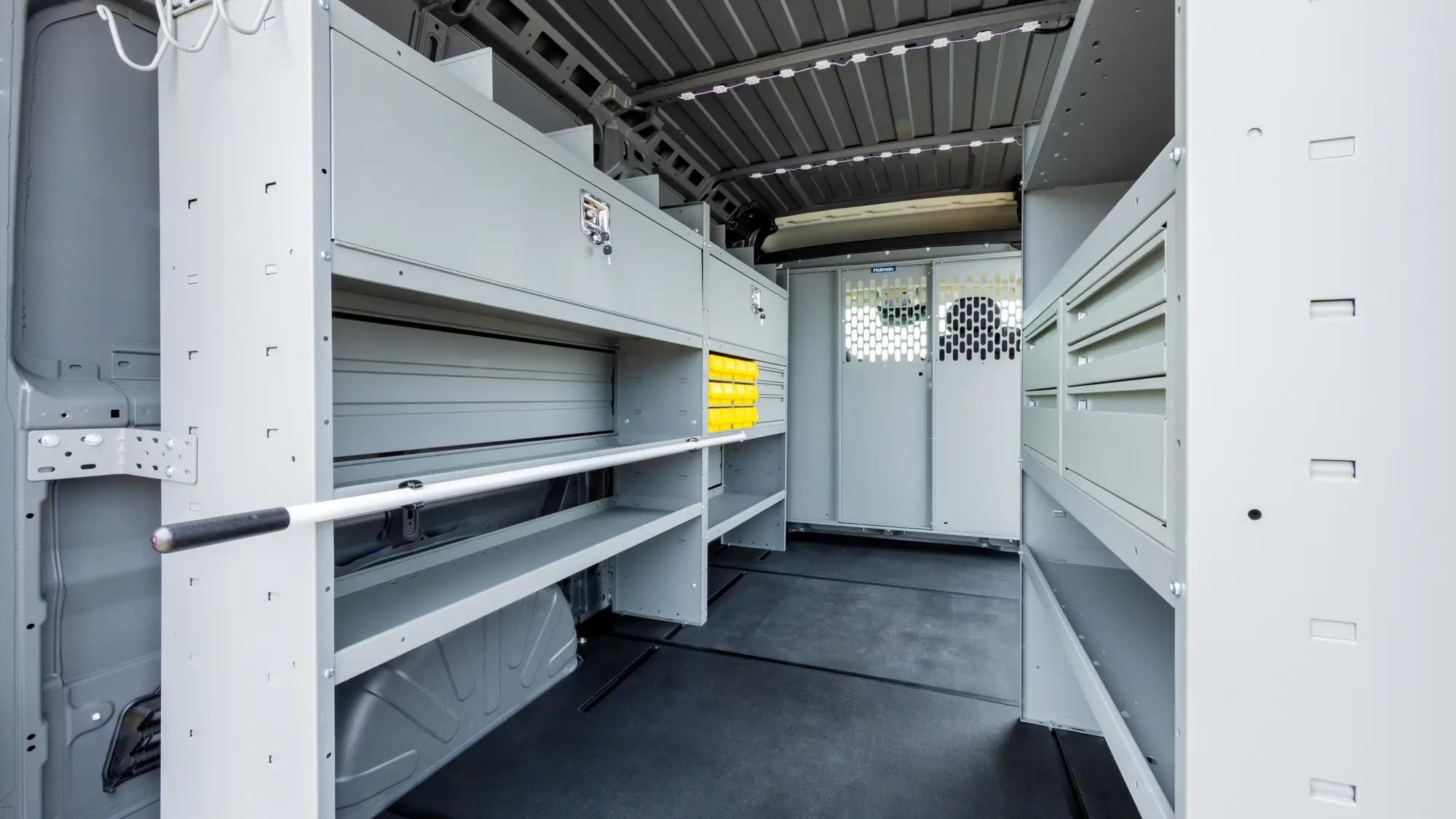
Holman rigid cargo flooring running the length of a shelved work van

Rigid Cargo Van Flooring — Omaha & Lincoln, NE
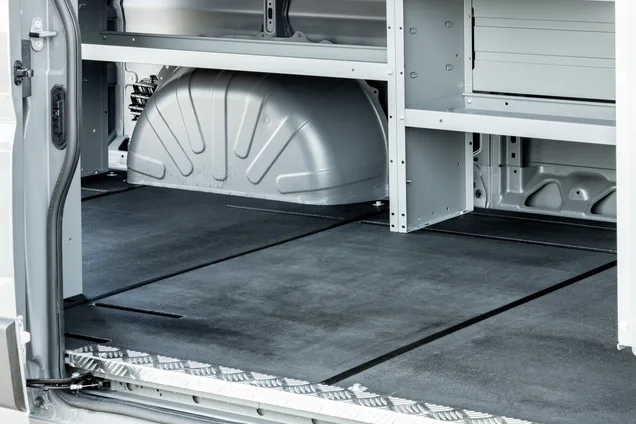
Rigid Cargo Flooring Systems for Omaha & Lincoln Work Vans

Request a Flooring Quote Browse Every Upfitting Service
Rigid cargo flooring installed in a work van

No surface in a work van takes more abuse than the floor. Every part slides across it, every shelf stands on it, every dropped tool lands on it — and under all of that sits the sheet metal your vehicle's value depends on. Revolution Upfitting installs rigid cargo flooring systems, including Holman flooring with integrated mounting track, for businesses across Omaha, NE and Lincoln, NE. A proper floor shields the van body from daily punishment and gives shelving and equipment a secure structural base to anchor into. It is the layer every good upfit is built on.

The Foundation Every Good Upfit Stands On

A floor system never gets admired the way a wall of gleaming shelving does — but it decides how well that shelving anchors, how the van survives its workload, and what the vehicle is worth when you eventually move on from it. Get the floor wrong and every layer above it inherits the problem; get it right and the rest of the build has something honest to stand on. Here is how we approach the layer underneath everything else:

Engineered Systems, Not Cut Plywood

We install commercial floor systems built for work vans, including Holman flooring designed around the vehicles crews actually drive. Plywood soaks up spills, splinters at the edges, and gives you nothing to fasten into; an engineered floor is a working platform made for the job.

Mounting Track That Anchors the Whole Build

Integrated track gives shelving, racking, and equipment a dedicated structural anchor point instead of relying on the thin factory floor alone. It is the difference between equipment that is attached to the van and equipment that is built into it.

Fitted to Your Exact Vehicle

Wheel wells, door thresholds, tie-down locations, and body contours are all accounted for before installation. A floor that fits tight protects; a floor that rocks and gaps collects grit and moisture that grind away at the metal beneath it.

Protection That Starts at the Sheet Metal

The point of the system is what it prevents: worn-through paint, trapped moisture, corrosion blooming from the inside, and dents from every load the van will ever carry. The abuse lands on the floor system so the body never takes it.

A Family Shop Thinking About Trade-In Day

A van is one of the biggest assets a small business owns, and a family-owned Nebraska shop treats it that way. Our story is full of customers we expect to see again at the next vehicle — so we protect this one like the relationship depends on it.

Sequenced Right With the Rest of the Interior

Flooring goes in first, then everything builds upward from it. Because we handle the whole interior under one roof, the floor, liners, and shelving are planned as one system with every fastener location decided a single time.
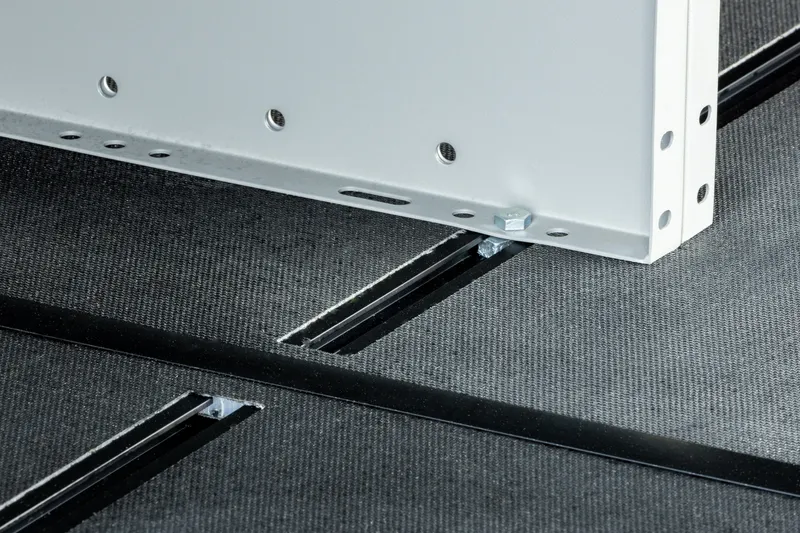
Holman rigid van flooring with mounting track

Describe the Load Your Floor Has to Survive

Tell us what the van carries, what slides around in the back, and what you plan to anchor down — that is everything we need to spec the right floor. Send it through our quote form, ideally with a photo or two of the cargo area as it looks today. Flooring is also the natural first step in a larger build: most customers pair it with van liners to finish protecting the walls and ceiling, anchor a van shelving system into the new mounting track, or roll the same floor spec across every vehicle through a fleet upfitting program. Whatever the scope, we would rather see the workload clearly before recommending anything.

Request a Flooring Quote

From Bare Metal to a Working Floor

Every flooring install follows the same path at our Omaha shop, and you approve each decision before the next one is made:

1

Vehicle and Workload Review

First we learn what the floor is up against — the vehicle it goes into and the work it has to survive:

Vehicle details — make, model, wheelbase, and door configuration that determine fitment

Cargo profile — what gets loaded, dragged, rolled, and dropped in a normal week

Anchoring plans — the shelving, racking, and equipment the floor will need to hold down

Condition check — a look at the factory floor for existing wear, damage, or corrosion

Crew habits — whether cargo slides, rolls on carts, or gets carried, and how loading actually happens

Future plans — what else is coming for this vehicle, so the floor supports the whole roadmap

2

Choosing the Floor System and Track Layout

With the workload understood, we spec the system — and if equipment will anchor into the floor, the track layout is designed now, not improvised later:

System selection matched to your vehicle and cargo, including Holman flooring options

Mounting track positioned around your planned shelving and equipment footprint

Surface characteristics weighed for the way your crew loads — sliding cargo, carts, or foot traffic

Compatibility confirmed with liners, partitions, and other equipment in the build

A complete specification written into your quote before anything is ordered

3

Templating and Pre-Installation Prep

Good flooring is decided before it goes in. We prepare the vehicle and verify the fit:

The cargo area cleared, cleaned, and inspected down to the factory floor

Fitment checked against wheel wells, thresholds, and body contours for your exact vehicle

Fastener locations planned and verified against wiring, fuel lines, and structure underneath

Existing tie-down points and factory features mapped so the design preserves what you use

Any existing wear or corrosion documented and discussed with you before the floor covers it

Sequencing confirmed with any liner or shelving work sharing the same project

4

Fitting and Securing the Floor

Installation happens at our facility, by our own team, with the same care at the edges as in the middle:

The floor system fitted tight to the body — wheel wells, thresholds, and contours included

Fasteners set at the planned locations, with every penetration properly sealed

Mounting track installed and secured as a structural part of the floor

Transitions finished cleanly at the doors, where boots and cargo hit hardest

A fit-and-finish check across the whole surface before anything gets anchored to it

The vehicle inspected and cleaned before it moves to equipment anchoring or handoff

5

Track Setup, Equipment Anchoring, and Handoff

The floor is done when your equipment is standing on it correctly — not when the last fastener goes in:

Shelving and equipment anchored into the track per the design, when part of the project

Anchor points demonstrated so your crew can use the track with confidence

A walkthrough of the finished floor, its features, and simple upkeep

Documentation of the installation for your records

An open invitation to return as your equipment needs evolve — the track is built for change

Cargo Flooring Questions Omaha & Lincoln Van Owners Ask

These are the flooring-specific questions we hear most often — usually from owners deciding between a proper system and another sheet of plywood. For general questions about quoting and the upfit process, our vehicle upfitting FAQ has the answers.

A mat covers the metal directly beneath it and little else. A rigid floor system creates a continuous, structural working surface across the entire cargo area — one that spreads the weight of loaded shelving and heavy equipment instead of letting it concentrate on the sheet metal. It also stays put; mats shift, curl, and trap grit that grinds against the paint underneath.

Plywood is a surface; an engineered system is a foundation. Holman flooring is built for commercial vans and integrates mounting track, giving shelving and equipment a dedicated structural anchor point. Plywood soaks up spills, splinters at the edges, and offers nothing to fasten into except the wood itself. An engineered floor is fitted to the vehicle and made for the workload.

That is exactly what the track is for. Anchoring shelving into a purpose-built track ties the system to a fixture engineered for the job rather than relying on the thin factory floor alone, and the result is a stiffer, more secure installation. Our guide to choosing a van shelving system covers how the floor and shelving decisions fit together.

Yes. Floor systems are fitted to the specific vehicle — wheel wells, door thresholds, tie-down locations, and body contours included. A tight fit matters for more than looks: gaps collect debris and moisture, and a floor that rocks or flexes wears both itself and the van. We verify fitment against your exact make, model, and wheelbase before anything is ordered.

Every fastener location is planned before installation, checked against the vehicle's wiring, fuel lines, and structure, and sealed wherever it penetrates. The goal is a floor that strengthens the cargo area without opening a path for moisture or corrosion. That level of care is exactly why flooring belongs with a professional installer instead of becoming a weekend project.

Flooring is the first layer of a well-sequenced build — it goes down before shelving is anchored, and it coordinates with wall and ceiling liners installed around it. Planning the whole interior at once lets us sequence the layers correctly and decide every fastener location a single time. If equipment is already installed, we will assess the options during your consultation.

They are partners. A rigid floor handles the surface that takes the most abuse — the one cargo slides across and shelving stands on — while liners protect the walls and ceiling from dents, scrapes, and scuffs. Together they seal the working shell of the van. Many customers install both in a single visit as a complete interior protection package.

The pattern is predictable: paint wears through where cargo drags, moisture finds the bare metal, and corrosion starts working from the inside of the vehicle outward. Dents and gouges follow every dropped tool and shifting load. By trade-in time, the cargo floor is often the loudest evidence of hard use. A floor system absorbs that abuse so the body underneath never takes it.

Yes — that flexibility is a major reason to choose a track-equipped system. As your inventory, racking, or trade changes, equipment can be relocated along the track without drilling a fresh pattern of holes in the vehicle. The van stays adaptable for its whole service life, and reconfiguration becomes a planning exercise instead of a repair job.

Cargo vans are the core application, and box trucks are strong candidates too — bigger floors take even more punishment. We fit each system to the specific make, model, and wheelbase, so the starting point is simply telling us what you drive. Product and workmanship coverage details are written into every quote, and our warranties page explains how that backing works.

Cargo Flooring Installs Around Omaha, Lincoln & Beyond

Every floor is fitted and installed at our Omaha facility, and the vehicles arrive from well beyond the metro — because a foundation is worth driving for:

  • Omaha, NE — the shop floor where every van floor is fitted and installed
  • Lincoln, NE — capital-city businesses protecting resale value
  • Papillion, NE — southern-metro vans hauling heavy inventory daily
  • La Vista, NE — neighbors with hardworking cargo areas
  • Bellevue, NE — trade and delivery vehicles on relentless routes
  • Elkhorn, NE — west-metro builders protecting brand-new vans
  • Bennington, NE — owner-operators guarding their biggest rolling asset
  • Nebraska City, NE — southeast Nebraska vans that work in all weather
  • Grand Island, NE — central Nebraska routes measured in hard miles
  • Kearney, NE — businesses along the I-80 corridor
  • Kansas City, MO — regional operations heading north for the build
Cargo Flooring Installs Around Omaha, Lincoln & Beyond Cargo Flooring Installs Around Omaha, Lincoln & Beyond

Build Upward From a Solid Floor

Once the foundation is in, the rest of the vehicle is ready to work. These services build on it:

Vehicle partitions

a bulkhead between cab and cargo keeps shifting loads away from your crew and gives the protected cargo area a hard boundary. Floor and partition installs coordinate naturally in one project.

Box truck upfitting

full interior builds for box trucks, where a durable floor underpins shelving, tie-downs, and workspace areas across a much larger footprint than any van offers.

LED cargo lighting

bright, efficient light so your crew can actually see the organized cargo area the floor makes possible, at every stop and in every season.

Steps & running boards

safer entry and exit for the crews climbing in and out of that cargo area at every stop, all day long.

Put a Rigid Floor Under Your Omaha or Lincoln Work Van

Every mile your van works without a proper floor, the damage compounds quietly. Cargo drags across the same paint until it is gone. Moisture settles into seams you cannot see. Shelving anchored to thin factory metal works itself loose one pothole at a time. By the time any of it becomes visible, the cheap fix has already left the building, and the repair conversation is a very different one. A rigid cargo flooring system stops that clock on day one — and if it carries mounting track, it upgrades every piece of equipment you anchor into it for the life of the vehicle.

Starting the conversation is easy. Tell us through our contact form what you drive and what the van hauls, and we will come back with a floor specification matched to your vehicle and your workload — Holman track systems included where anchoring matters. You review the plan, the fit is verified against your exact model, and the installation happens at our Omaha facility with every fastener planned and sealed. Nothing improvised, nothing ordered until you have signed off.

We are a family-owned Nebraska shop that expects to see your next vehicle too, and we treat this one accordingly — the experiences in our customer reviews reflect it. Whether the van is fresh off the dealer lot or already showing its miles, the best day to protect the floor is before the next load goes in — and the second-best day is today. Let's get a real foundation under your equipment, and under everything you plan to build on top of it.

© Red Barn Media Group 2026