Vehicle Steps & Running Boards

Steps & Running Boards Built for Safer Access in Omaha & Lincoln

Get a Free Steps & Running Board Quote See Everything We Upfit
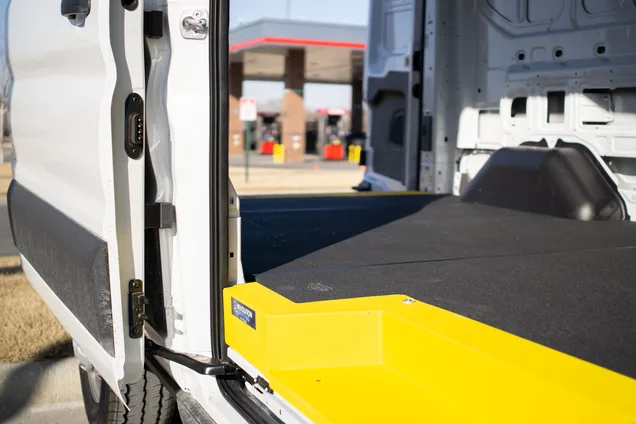
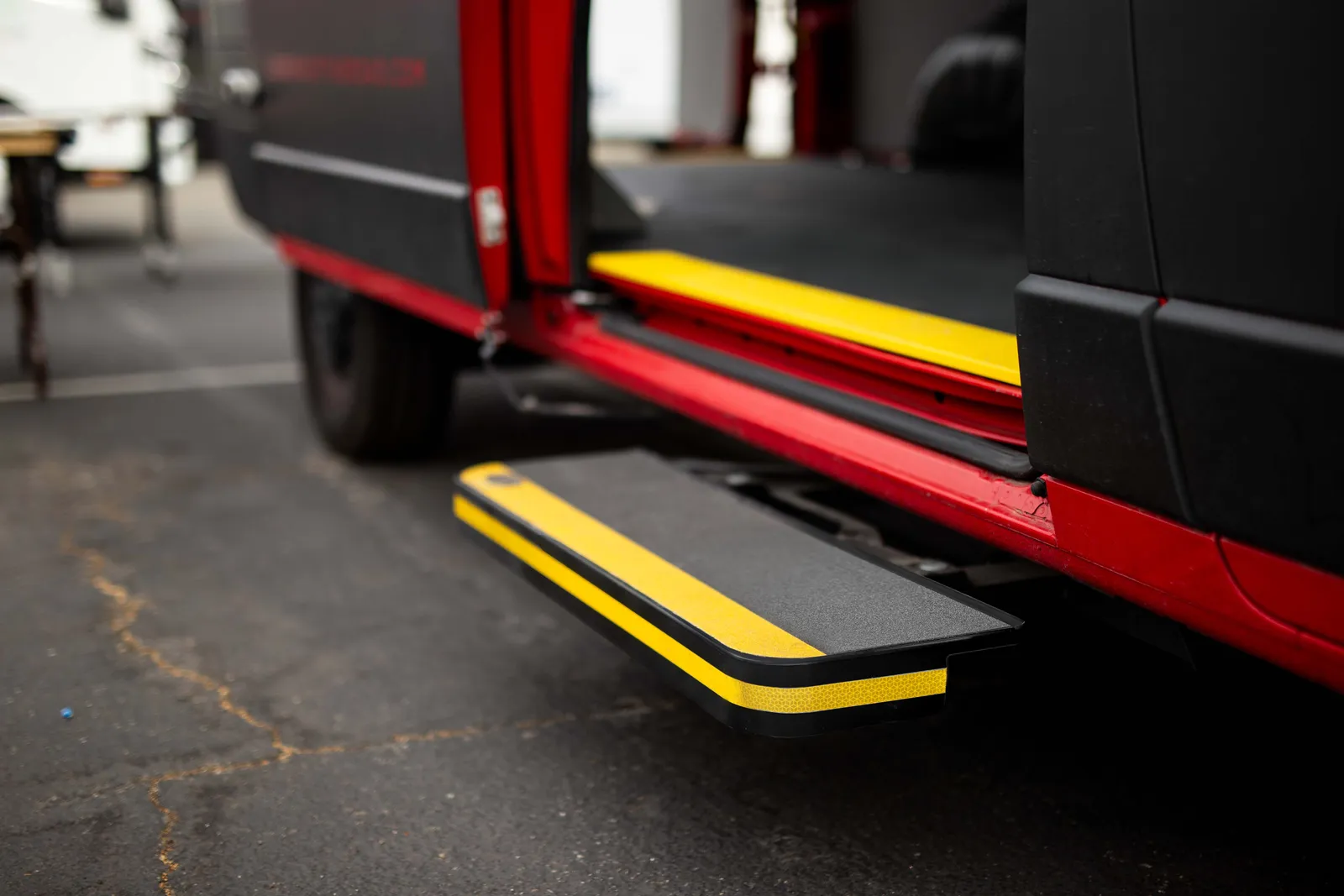
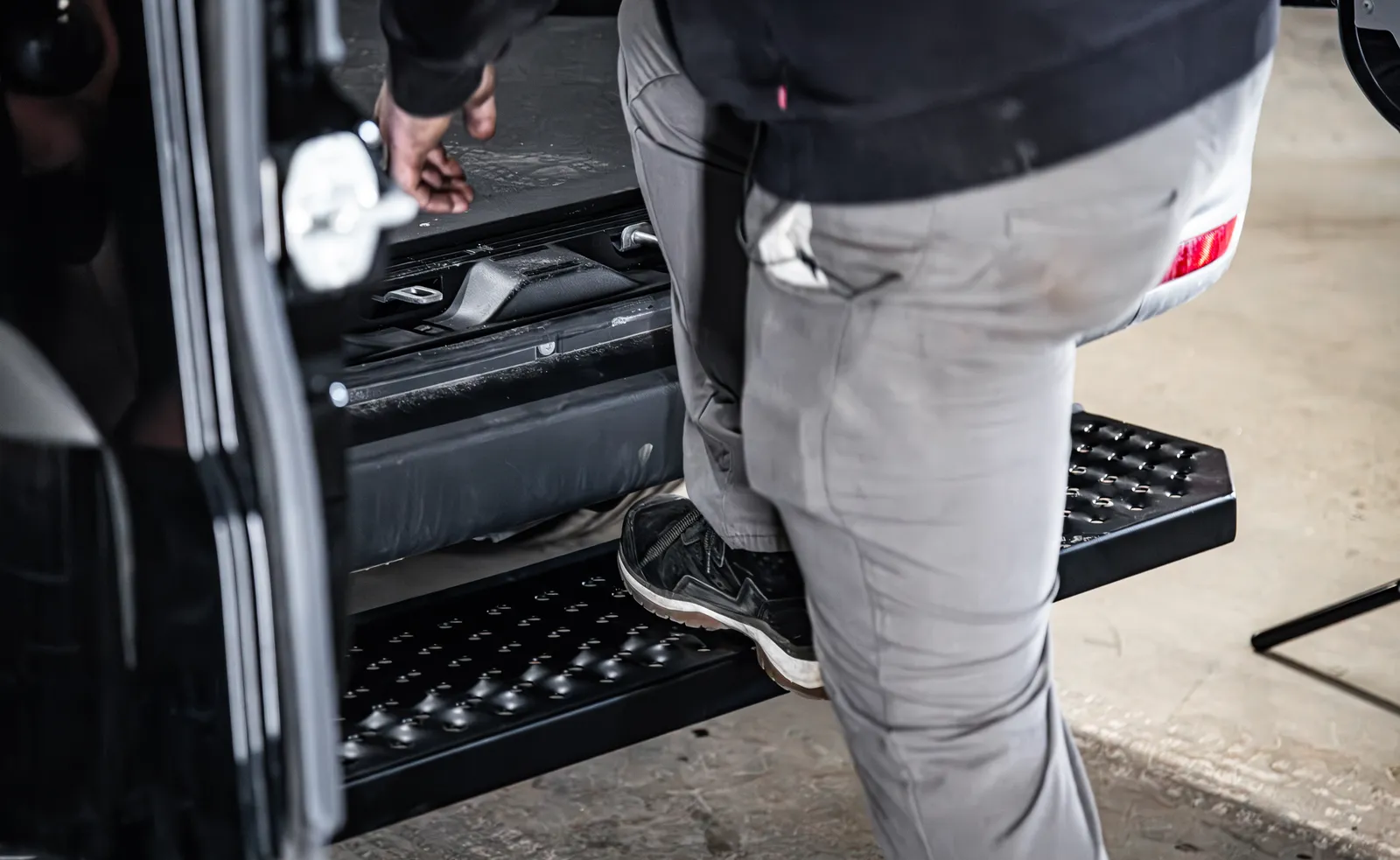
Non-slip step installed at a work van side door

Your crew climbs in and out of their vehicles more times a day than they touch any tool on the shelf. Every one of those entries and exits is either a stable, deliberate step — or a stretch, a hop, and a little luck. At Revolution Upfitting in Omaha, NE and Lincoln, NE, we install aluminum and steel steps and running boards with non-slip surfaces on trucks, vans, SUVs, and commercial vehicles, so getting in, getting out, and loading up stay safe in every season Nebraska throws at you. It's a small upgrade that quietly prevents the injuries nobody budgets for.

The Difference the Right Step Makes at Six in the Morning

Slips at the door sill and hard jumps down from the cab don't make headlines, but they quietly wear crews down — sore knees, twisted ankles, and the occasional injury report that could have been avoided with a stable step in the right place. We treat vehicle access as a safety system, and we install it like one. The points below are the reasons crews keep telling us they wish they'd done this sooner.

Entry and exit are the most repeated movements of the workday

A technician can enter and leave a vehicle dozens of times per shift. Giving that movement a stable, consistent platform reduces strain on knees and ankles and takes the guesswork out of every climb. Over a season, those small savings in strain add up in ways crews genuinely feel.

Non-slip surfaces made for real Nebraska weather

Rain, slush, mud, and ice all end up on a step eventually. We install treads engineered to grip work boots and shed the mess, so the surface your crew trusts in July is still trustworthy in January. Grip that quits in bad weather isn't grip — it's a liability.

Loading efficiency, not just footing

The right step turns hard-to-reach spaces into usable ones: bed rails, roof-mounted ladder racks, and tall cargo doorways all become easier to work from when there's a solid platform underneath. Faster, safer loading turns into minutes saved at every stop.

Aluminum and steel builds for commercial duty

Light-duty accessory boards flex, corrode, and quit. We install aluminum and steel step systems built for daily jobsite abuse, matched to the weight, weather, and workload your vehicles actually see. We'd rather install the right system once than replace a flimsy one twice.

Every vehicle on your roster

Pickups, cargo vans, SUVs, and larger commercial units all have different sill heights and different access problems. We fit the step solution to each body style instead of forcing one product across the board. That's the standard whether you run one pickup or forty vans.

A family-owned partner in crew safety

As a family business, we know what it means when the people climbing in and out of those vehicles are your people. We install steps the way we'd want them installed for our own family: solid, tested, and right the first time. Ask us anything before the work begins — that's what partners are for.
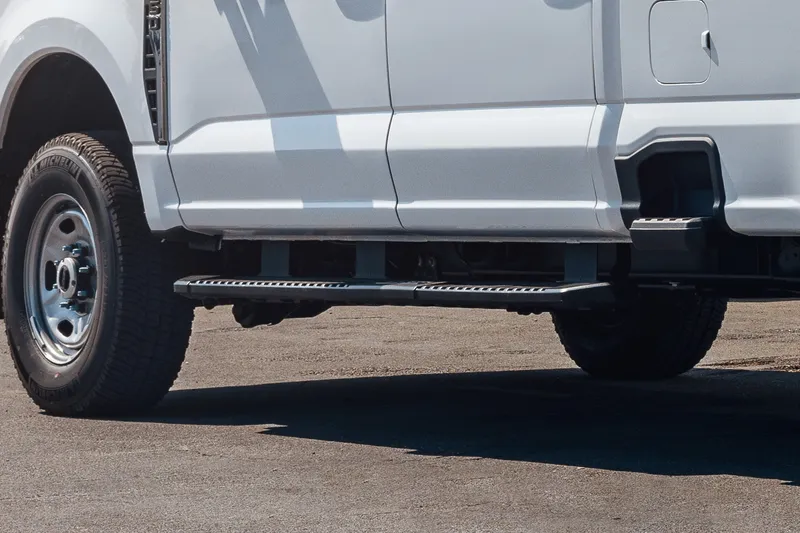
Running boards installed on a work pickup

Get an Access Recommendation for Your Truck or Van

Send us the vehicles you run and the problems your crew complains about — high sills, icy footing, awkward bed access — through our quote form and we'll map a step and running board setup to match. Access upgrades also pair naturally with truck bed storage systems your crew reaches over every day, van liner installation that protects the floor they're stepping onto, and vehicle partitions that complete the safety picture inside the cab. Include how many vehicles you run — access upgrades scale naturally across a fleet.

Get a Free Steps & Running Board Quote

From First Measurement to Final Torque Check

Steps and running boards look simple bolted to the finished vehicle. Getting them positioned, rated, and mounted correctly for a working crew is a process — and this is ours. It's the difference between an accessory bolted to a vehicle and a piece of safety equipment your crew can trust for years. General questions about how our shop operates are answered in the vehicle upfitting FAQ.

1

Step 1 — Map How Your Crew Enters, Exits, and Loads

We look at the vehicle the way your crew uses it, not the way it sits in a brochure. Ten minutes of watching how people actually climb tells us more than any catalog page.

Measure sill heights, door openings, and rear access points

Watch for the real problem spots — cab entry, bed corners, cargo doors

Note the boots, weather, and jobsite conditions your crew works in

Account for who drives the vehicle, from the tallest tech to the shortest

Flag loading tasks that need a working platform, not just a foothold

Photos of each entry point captured for the build record

2

Step 2 — Select the Step Style, Material, and Tread

With the access map in hand, we narrow the options to what fits your work. Style, material, and tread each get chosen on purpose — never by default.

Full-length running boards versus individual cab steps at each door

Rear step options for bed and cargo door access

Aluminum for corrosion resistance and weight savings, steel for raw toughness

Tread patterns chosen for grip with muddy, wet, or icy boots

Confirmation the choice fits your truck, van, SUV, or commercial body

Finish options weighed against the vehicle's appearance and workload

3

Step 3 — Verify Clearance, Geometry, and Mounting Points

Before anything is bolted on, we make sure the new hardware and the vehicle agree with each other. This is the step that prevents comebacks, rubs, and rattles later.

Check ground clearance and approach angles against how the vehicle is used

Locate factory mounting points and confirm hardware compatibility

Position each step where a natural stride actually lands

Verify doors, mud flaps, and body lines stay unobstructed

Review the final layout with you before installation begins

Confirm jacking points and service access stay fully usable

4

Step 4 — Install, Torque, and Seal Every Fastener

Mounting day is where careful planning turns into hardware your crew can stand on without a second thought. We work clean, torque everything, and check our own work twice.

Mounting surfaces cleaned and protected before installation

Brackets aligned and fastened at engineered mounting locations

Every bolt torqued to specification and re-checked after fit-up

Contact points treated to guard against corrosion at the rockers

Step surfaces inspected so treads are clean, level, and secure

Hardware logged so future service knows exactly what's on the vehicle

5

Step 5 — Walk the Vehicle With Your Crew

The job ends with people, not parts — we confirm the access upgrade works for the humans using it. If a step doesn't land naturally under a boot, we adjust it before the keys go back.

Load-bearing check on every step and board position

Entry, exit, and loading walkthrough with you or your drivers

Adjustment notes captured while the vehicle is still in our shop

Care pointers for keeping non-slip surfaces gripping through winter

Documentation of the completed install for your records

An open invitation back to our shop if anything ever loosens or wears

Steps & Running Board Questions From Omaha & Lincoln Crews

Yes. A running board shortens the climb, gives boots a consistent landing spot, and removes the awkward half-jump that ends so many workdays with a rolled ankle. For crews entering and exiting dozens of times a shift, a stable, properly positioned step turns the most repeated movement of the day into a controlled one.

The treads we install are designed to grip work boots and shed water, slush, and mud rather than hold it. That keeps footing reliable through most of what a Nebraska winter delivers. We still recommend crews knock off packed ice like they would on any surface, and we'll show you how to keep treads clear during the handoff.

Some styles sit lower than others, which is why clearance is checked before anything is ordered or installed. We measure your vehicle, look at where it operates — pavement, gravel, or rough sites — and recommend a mounting position and style that adds safe access without dragging the vehicle's usable clearance down.

Running boards span the full cab length and give a continuous platform at every door, while individual steps mount compactly at each entry point. Boards suit crews moving along the vehicle; steps keep a lower profile and shave weight. We'll recommend one or the other based on your vehicle and how your crew loads.

Yes. Rear access is where a lot of loading injuries happen, and dedicated rear steps give your crew a stable platform at the tailgate or cargo doors instead of a scramble over the bumper. They're one of the most practical upgrades for delivery vans and service bodies that get loaded and unloaded all day.

Both earn their place. Aluminum resists corrosion from road salt and keeps added weight low, which matters for payload-conscious vans. Steel takes brutal daily abuse and shrugs off impacts on rough sites. We recommend the material based on your routes, your loads, and how long the vehicle stays in your fleet.

We do. Taller commercial bodies have the highest entry points and the most to gain from proper access hardware. Steps are also a common part of a complete box truck upfitting project, where cab access, rear entry, and interior work zones all get addressed in a single build.

Not when they're installed correctly. We mount to engineered attachment points, treat contact surfaces to guard against corrosion, and never improvise holes through body panels. Sloppy installs are where rocker damage comes from — which is exactly why we control the mounting process from measurement through final torque check.

Absolutely, and fleets that do it see the benefit every time a driver switches vehicles: the step is where their boot expects it to be. We can spec matching access hardware across mixed vehicle types as part of a fleet upfitting program, keeping safety consistent from unit to unit.

Professionally installed access hardware uses engineered mounting points designed for the job, which is a very different thing from drilling into a frame freehand. Our installations are covered by our workmanship warranty, and the products we install carry their manufacturers' backing — the details are on our warranty coverage page.

Step & Running Board Installs Across Our Service Area

From our Omaha facility, we upgrade vehicle access for crews working throughout Nebraska and into Missouri. If a vehicle can reach our shop, we can make it safer to climb into. We install for crews across:
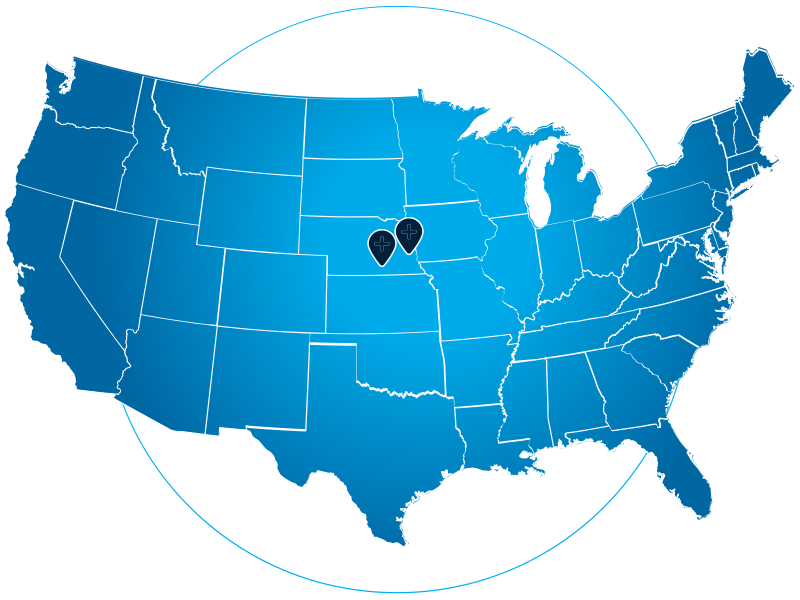
  • Omaha — metro trades keeping techs safe on every entry and exit
  • Lincoln — fleets standardizing steps across their rosters
  • Papillion — pickups and service vans getting proper footing
  • La Vista — commercial vehicles upgraded with non-slip access
  • Bellevue — delivery and contractor vehicles loading smarter
  • Elkhorn — new work trucks fitted out before their first season
  • Bennington — owner-operators building safer daily drivers
  • Nebraska City — rural routes where solid footing matters most
  • Grand Island — hard-used vehicles from central Nebraska
  • Kearney — highway fleets adding all-weather access
  • Kansas City — Missouri crews making the trip for a proper install
Step & Running Board Installs Across Our Service Area Step & Running Board Installs Across Our Service Area

More Ways We Upfit Omaha & Lincoln Work Vehicles

Safe access is one layer of a well-built vehicle. These services handle the rest of it — and most of the vehicles we fit with steps leave with at least one of them on the schedule.

Van shelving systems

Aluminum and steel Sortimo and Holman shelving that puts every tool in a labeled, secured place your crew can reach without digging. Organization inside the van matters as much as safe footing outside it.

Ladder rack installation

Aerodynamic steel and aluminum racks that carry ladders and long material overhead — the upgrade that makes rear steps and boards work even harder. Loading from a stable step beats climbing a bumper every time.

Box truck interior builds

Shelving, tie-downs, and workspace layouts that turn a box truck into a rolling shop. Access hardware belongs in that build, from cab steps to rear entry.

Fleet upfitting programs

One spec, every vehicle: standardized safety and storage across your entire fleet, with Holman fleet expertise behind it. Every unit gets the same safe footing, and every driver knows what to expect.

Schedule Steps & Running Board Installation in Omaha or Lincoln

The math on vehicle access is simple: multiply every entry, exit, and load-up by every vehicle you run, every working day of the year. That's how many chances there are for a slip, a strain, or worse — and how many times a properly installed step or running board quietly does its job instead. Few upfits deliver this much safety for this little disruption to your operation. And unlike most safety initiatives, it doesn't need a training rollout — it just needs to be installed correctly.

If you manage more than one vehicle, think beyond a single truck. Standardized access hardware means every driver's boot lands where instinct says it will, no matter which unit they grabbed the keys to that morning — a principle we unpack in our article on why fleet upfitting standardization pays off. And because we're a family-owned Nebraska shop, you'll deal with people who stand behind the work; get to know Revolution Upfitting before you ever drop off a vehicle. And when the trucks need graphics to match, our sister company Revolution Wraps handles the visual side.

Tell us what you drive, what your crew struggles with, and where the vehicles work. We'll come back with a step and running board recommendation built around real boots, real weather, and real loads — and we'll install it right the first time. Photos of the vehicles and the spots where boots currently land are a helpful head start.

© Red Barn Media Group 2026