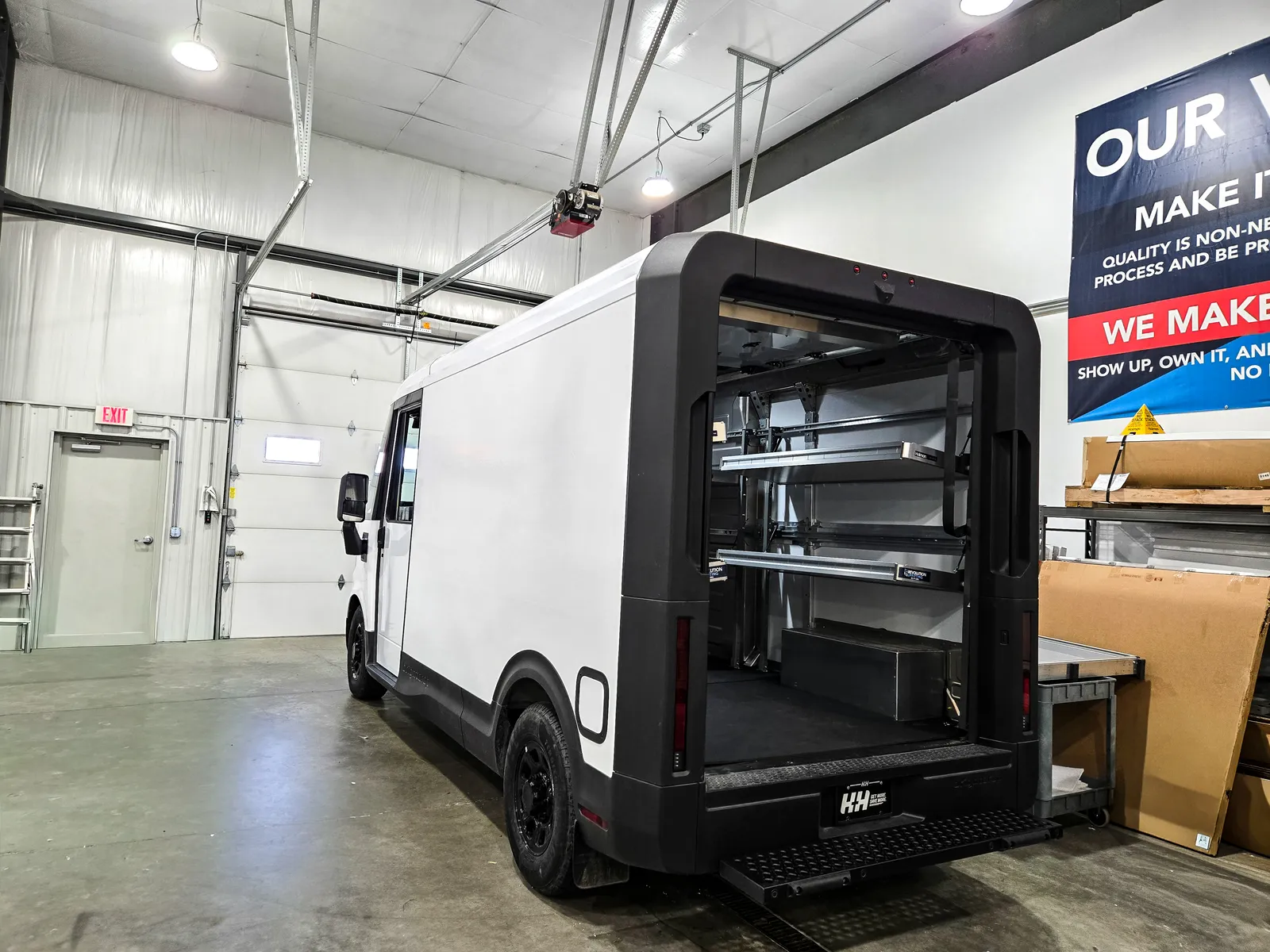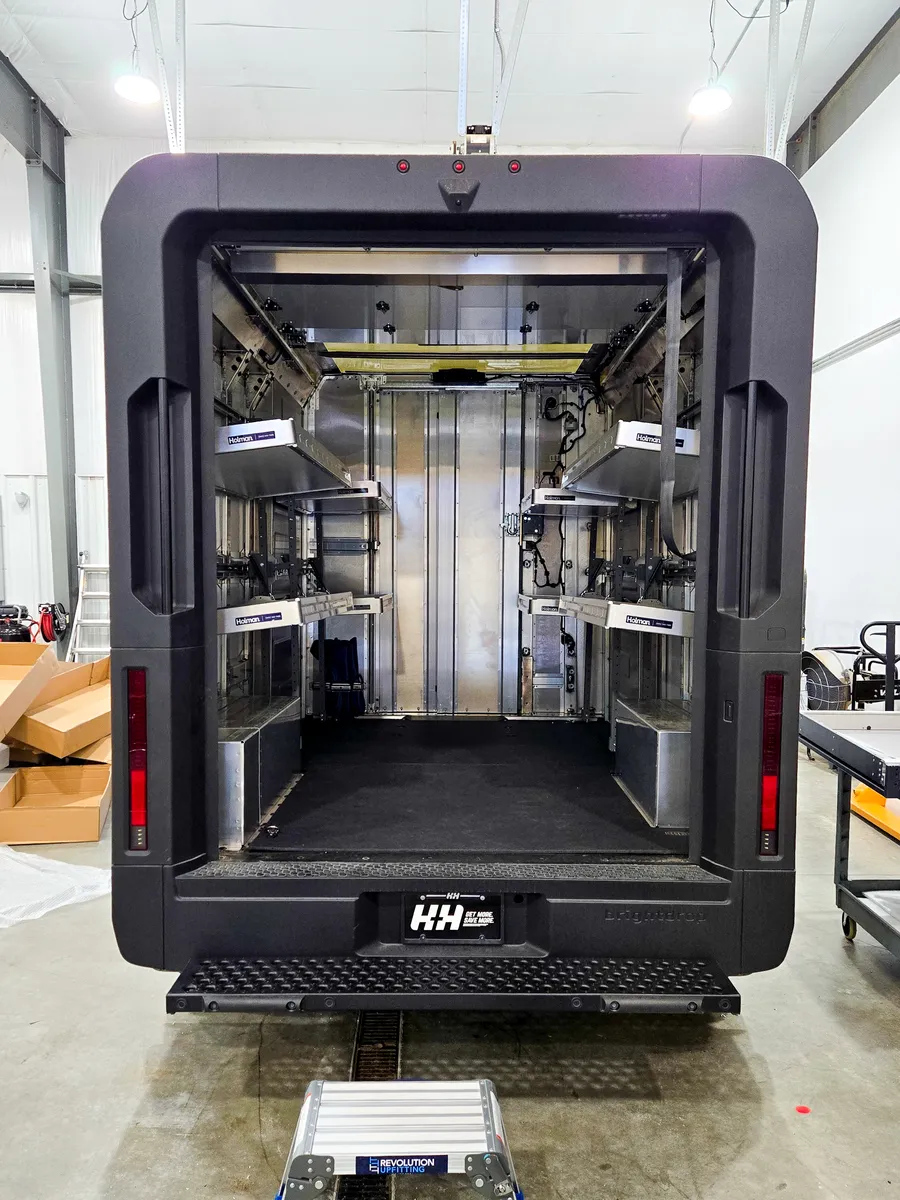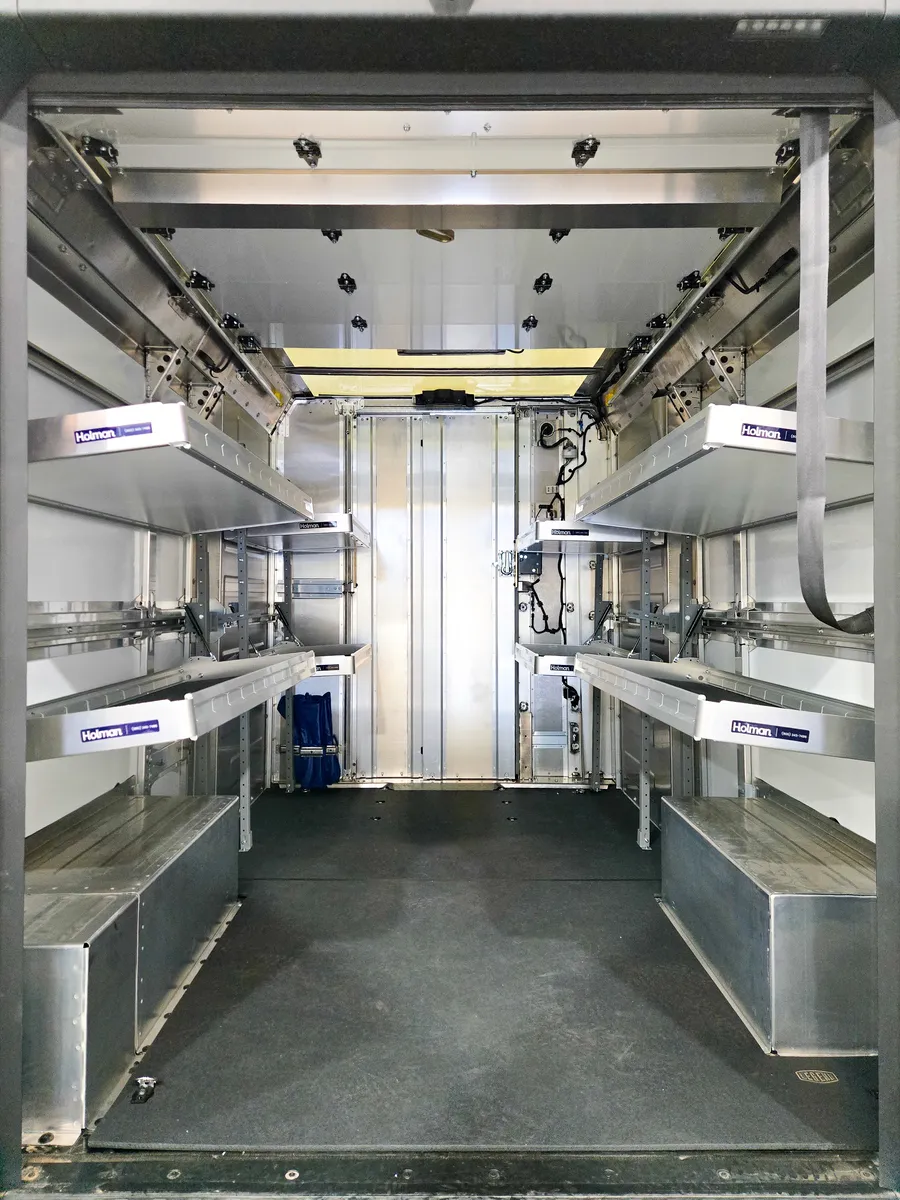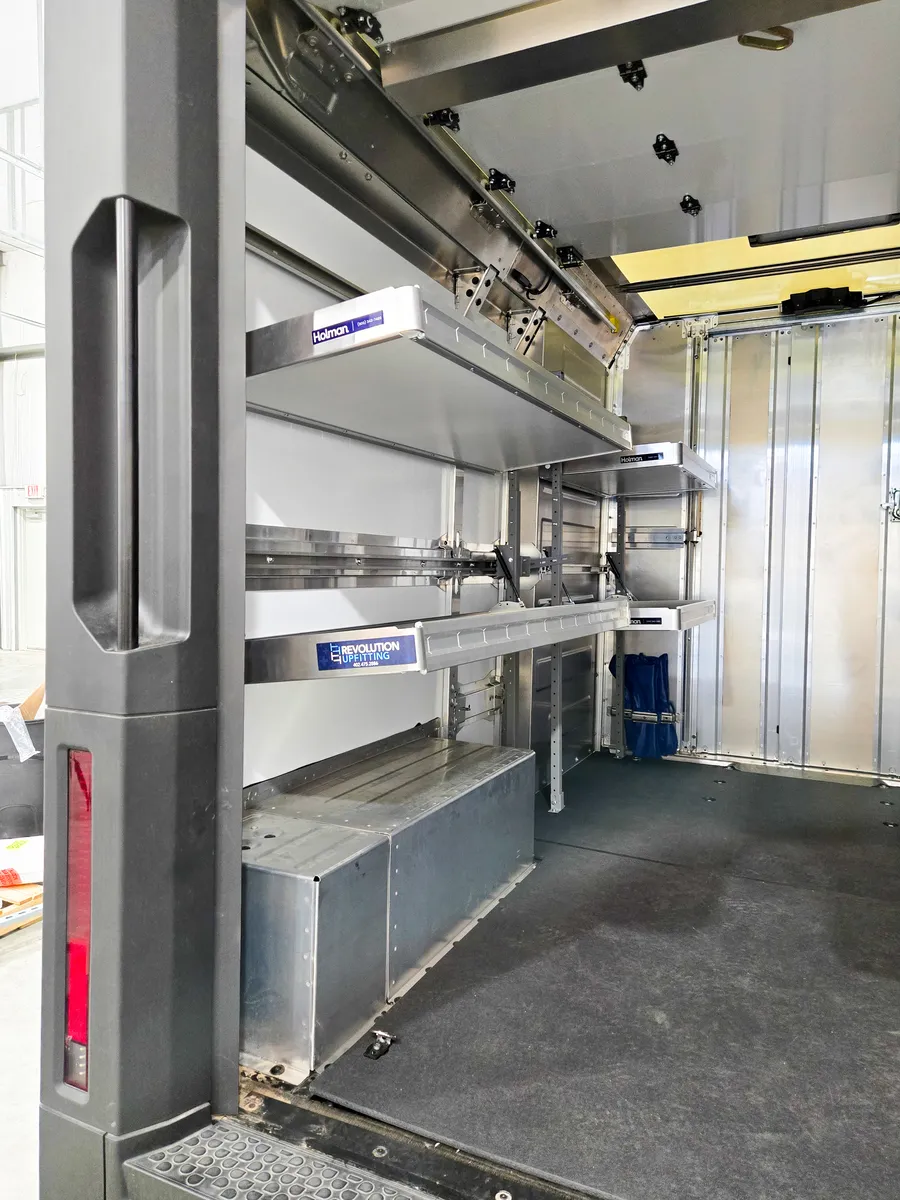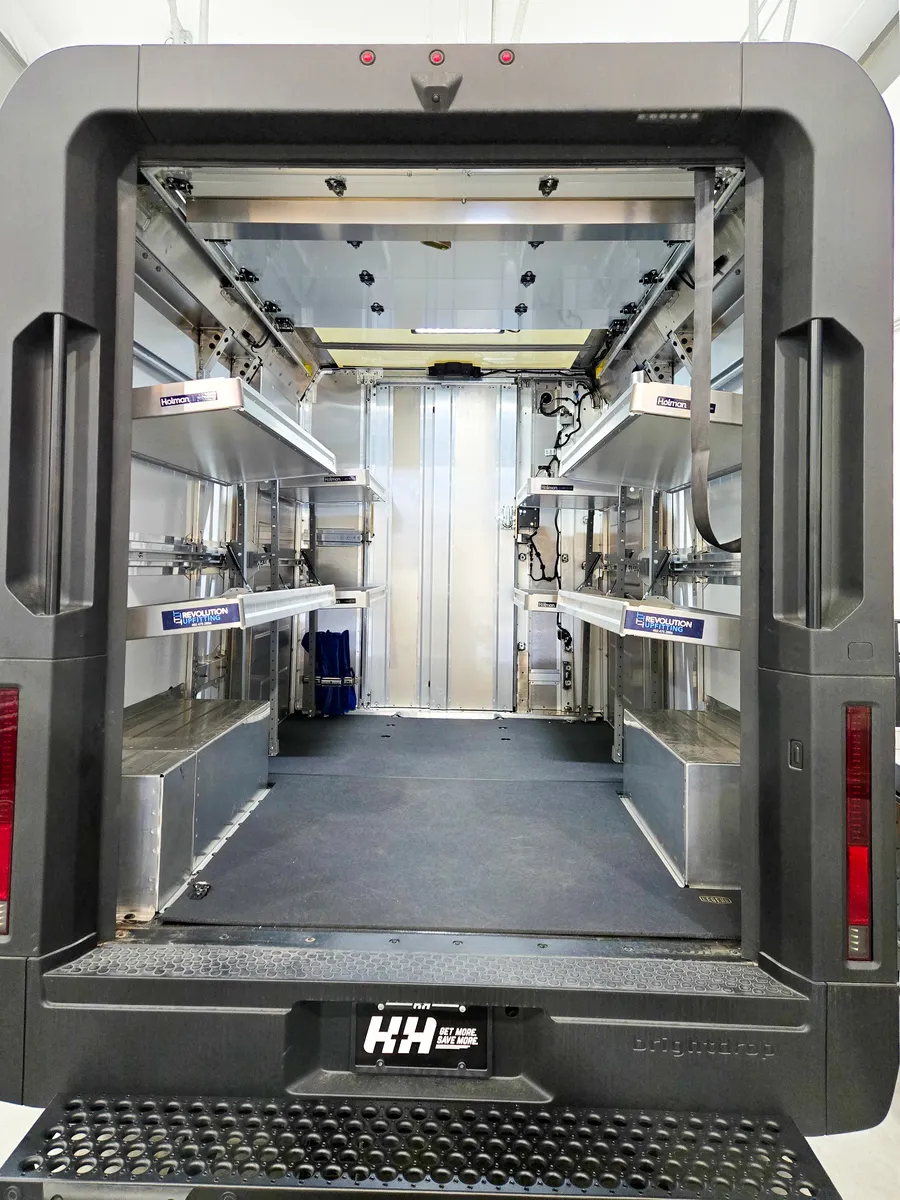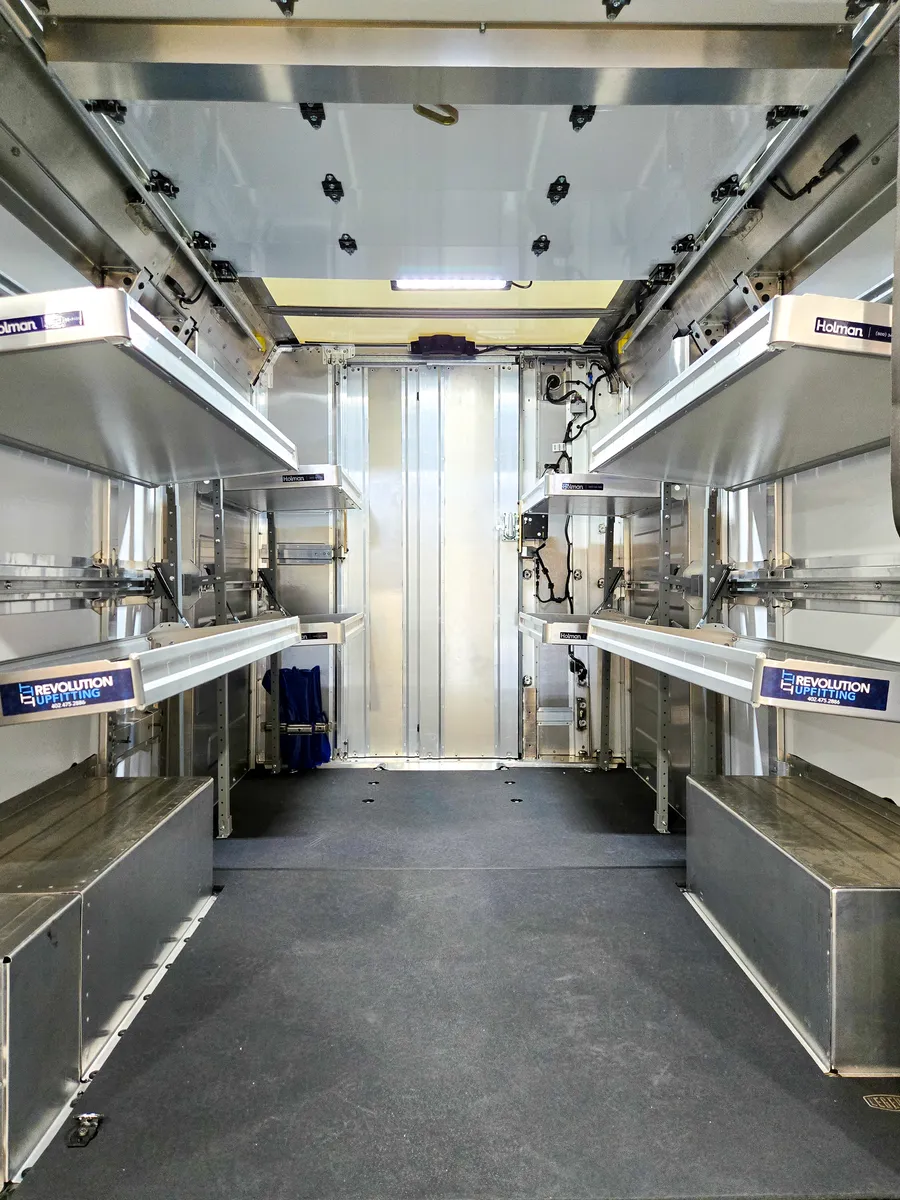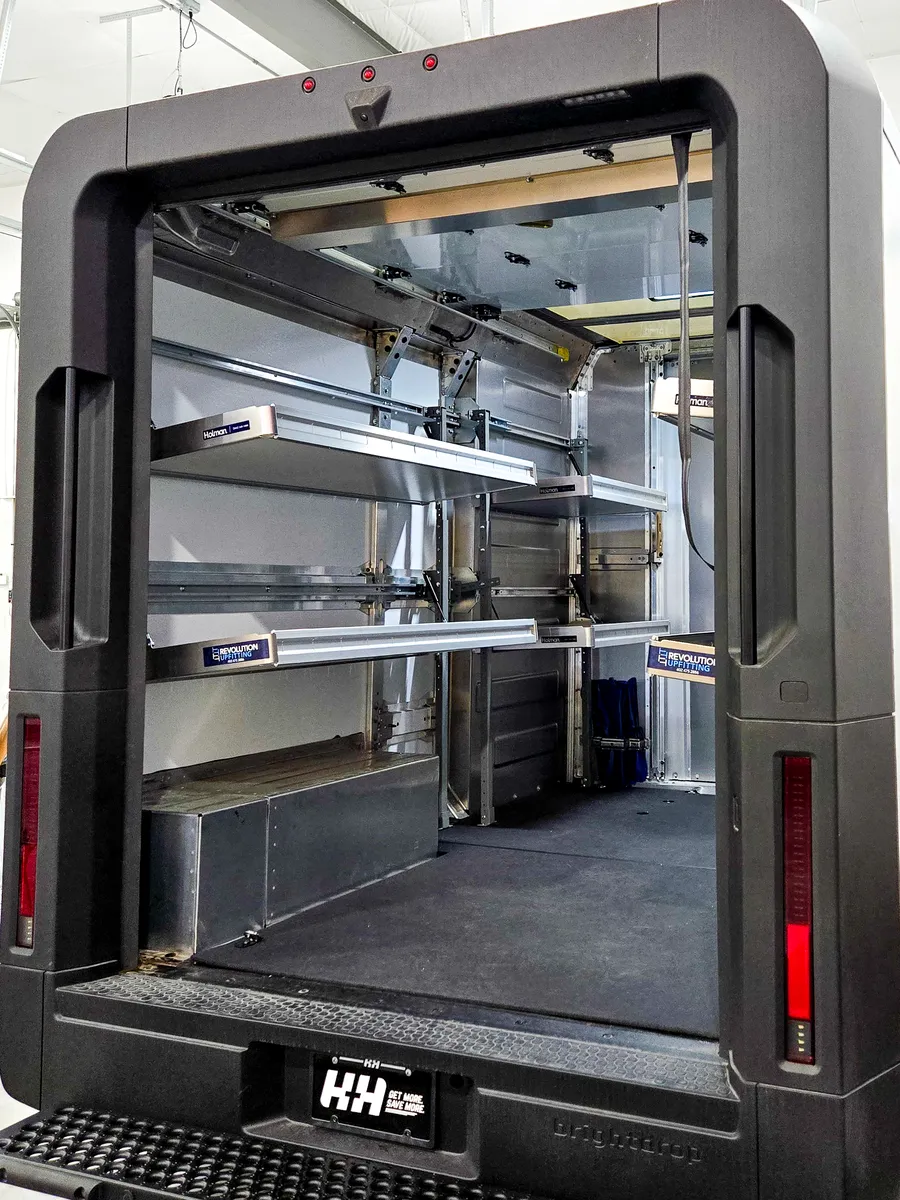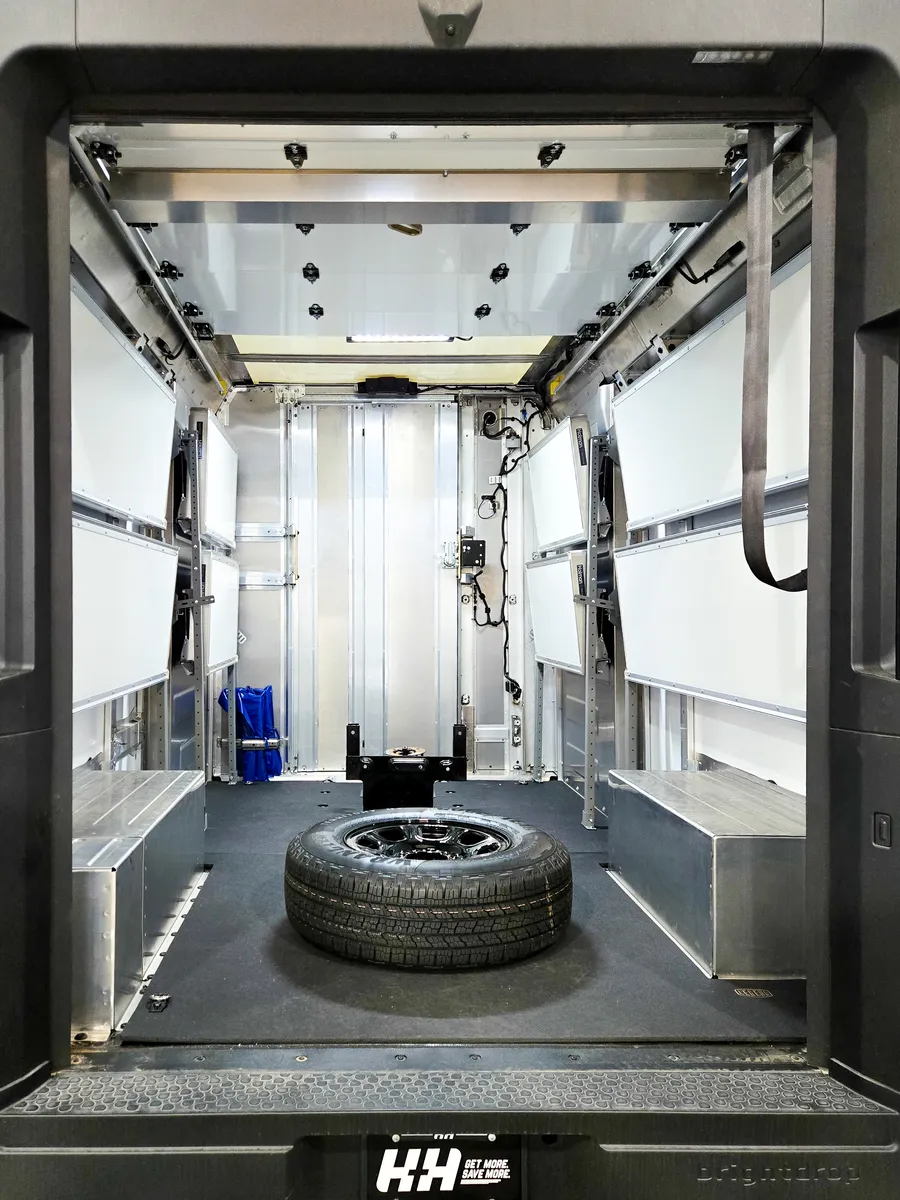
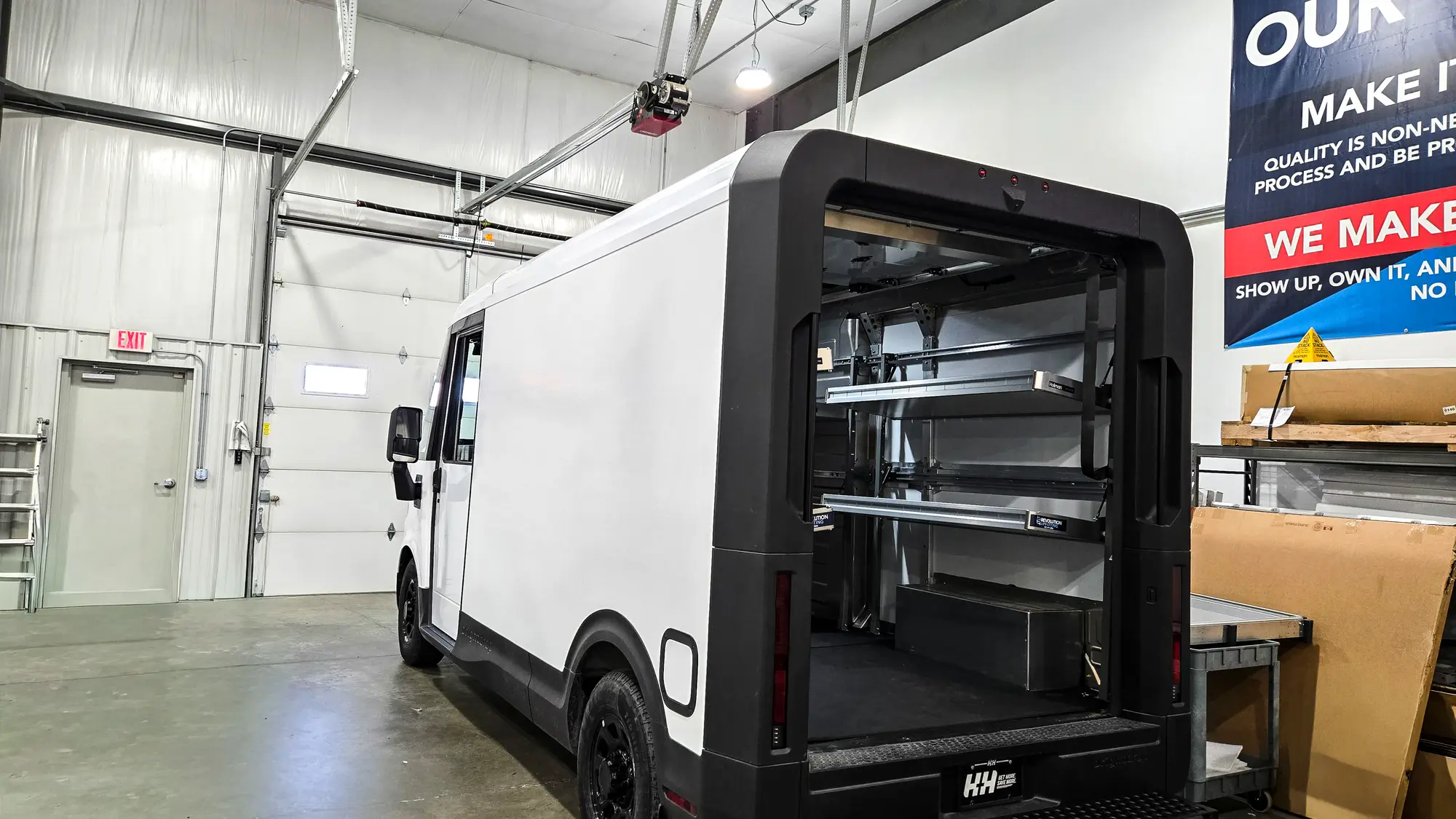
Walk-in box truck with a shelving upfit, parked inside a shop

Mobile Workspaces for Trades and Delivery Teams
Box Truck Upfitting in Omaha & Lincoln: From Empty Box to Mobile Workspace

Request a box truck upfitting quote Tell us how your crew uses the truck
Revolution Upfitting box truck signage advertising vehicle shelving, partitions, and ladder racks

An empty box truck is raw square footage — and most of it goes to waste the day cargo starts sliding around inside. We build box truck interiors for trades and delivery operations across Omaha and Lincoln: shelving runs that hold parts and equipment in place, tie-down systems that end load shift, and workspace areas that let your crew work out of the truck instead of around it. As a family-owned Nebraska upfitter, we design each box around the operation it serves. Request a box truck upfitting quote or tell us how your crew uses the truck.

Why Working Crews Hand Us the Keys to Their Box Trucks

A box truck upfit succeeds or fails on whether the interior matches the job it rolls out to do. Here is what sets our builds apart:

Layouts Mapped to the Way Your Crew Works

Before we mount a single shelf, we learn your workflow: what gets loaded first, what gets grabbed most, who works inside the box and for how long. The layout follows the job, which is why the finished truck feels obvious to use instead of clever to look at. That is also why our layouts survive contact with a busy season.

Commercial-Grade Shelving and Securement

We build with proven equipment, including Sortimo and Holman shelving systems, in aluminum and steel configurations that stand up to daily commercial abuse. Tie-down points and securement hardware are placed where your loads actually need them, not where the template says. Commercial duty is the design assumption, not an upgrade.

Every Cubic Foot Accounted For

A box truck offers more interior volume than any van, and an undisciplined layout squanders it. We plan wall runs, aisle width, and overhead space together so capacity, access, and organization stop competing with each other. The box works harder without feeling fuller.

Trades and Delivery, Both Covered

A plumbing contractor and a parcel operation need very different boxes, and we build both. Heavy fixed shelving and workspace zones for the trades; sortable, high-turnover storage and clear aisles for delivery work. The equipment list changes, but the discipline behind the layout does not.

Family-Owned, Nebraska-Built

When a family shop upfits the truck your business depends on, accountability has a face. Our name rides around town on your box, so we build like it — meet the family behind Revolution Upfitting and judge for yourself. Our sister company, Revolution Wraps, handles vehicle graphics — so the same family can make the outside of the box work as hard as the inside.

A Build That Is Backed After the Install

The relationship does not end at pickup. Our workmanship is warranty-backed and the products we install carry their manufacturers' backing — the details are laid out on our warranties page in plain language. If a component ever disappoints, you will know exactly who to call and what is covered.
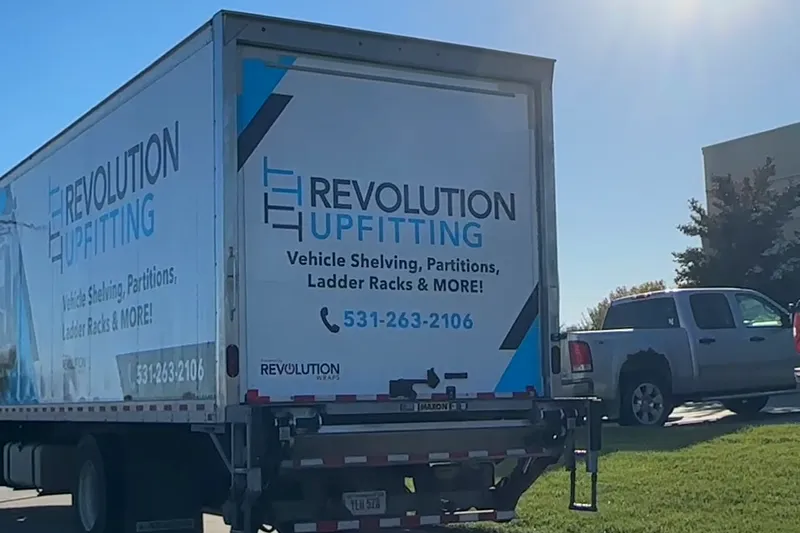
Revolution Upfitting branded box truck

Sketch Us Your Ideal Box Truck Interior

Use the quote form to describe your truck, your trade, and what the interior needs to do — even a rough phone photo of the empty box helps. We come back with layout ideas and product direction. If your operation also runs vans, the same thinking applies to our van shelving systems and van liner installations, and multi-vehicle operations can roll box trucks into a fleet upfitting program with one consistent spec. Attach a photo or two of the box as it runs today — the current state tells us as much as any wish list.

Request a box truck upfitting quote

How an Empty Box Becomes a Rolling Shop

Box trucks reward planning more than any vehicle we upfit — the space is big enough to get wrong in expensive ways. Here is the path every build follows.

1

Operation Walkthrough and Box Assessment

We start by understanding the work, then the truck. Both have a vote in the final layout, because the best box builds are copied from how the crew already moves.

Document how the crew loads, unloads, and moves through the box on a typical day

Identify the highest-turnover items that need prime, reach-in locations

Measure interior dimensions, door openings, and usable wall structure

Assess floor condition and existing anchor points

Flag weight distribution considerations for how the truck will be loaded

Capture what gets damaged, lost, or re-bought most often

2

Interior Layout and Materials Plan

Next we turn observations into a drawn plan you can react to before anything is built. Changes are easy at this stage, which is exactly why we insist on it.

Lay out shelving runs, securement zones, and open cargo areas on the floor plan

Select shelving platforms and materials suited to your loads, drawing on lines like Sortimo and Holman

Position tie-down points along the routes cargo actually travels

Reserve workspace areas where the crew needs to stand and work

Draft aisle widths around the crew's real walking and carrying patterns

Apply the same selection logic we outline in our guide to choosing a shelving system, scaled up to box-truck dimensions

3

Floor, Wall, and Anchor Preparation

Good preparation is invisible in the finished truck but decides how long the build lasts. We would rather over-prepare a box than revisit one.

Prepare floor and wall surfaces so mounted components seat solidly

Reinforce mounting locations where the box structure needs it

Establish anchor points rated for the securement loads planned

Protect the box interior and door hardware throughout the work

Verify the layout against the plan one final time before assembly

Confirm door operation stays clean around every planned component

4

Shelving, Tie-Down, and Workspace Installation

This is where the plan becomes hardware — installed straight, square, and anchored to structure.

Install shelving runs, bins, and dividers per the approved layout

Mount tie-down hardware and securement systems at the planned stations

Build out workspace surfaces and organization zones

Torque, align, and inspect every fastener and joint

Keep aisles and door clearances exactly as drawn

Verify each shelf and surface sits level and solid before load testing

5

Loaded Shakedown and Crew Orientation

An upfit is not finished until it works with your real cargo and your real crew. The shakedown is where good plans become proven ones.

Load the truck with your actual equipment and stock, adjusting shelf and divider positions live

Demonstrate securement points and proper tie-down technique

Walk the crew through the layout logic so it gets used as designed

Review care guidelines for shelving, hardware, and surfaces

Leave written notes on the layout so new hires learn the system fast

Point out where the build could grow — including the rest of our vehicle upfitting services — as the operation evolves

Box Truck Questions We Hear Around Omaha & Lincoln

The core elements are shelving runs, tie-down and securement systems, and dedicated workspace areas — combined into a layout designed around your operation. A trade truck might get heavy parts shelving and a standing work zone; a delivery box might get high-density sortable storage with clear aisles. The box is a blank canvas, and the build is drawn around your workflow. Every layout starts from zero, not from a template.

Yes, and dual-wall runs are common because the box is wide enough to keep a working aisle between them. The real question is aisle width: we plan shelving depth on each side around what the crew carries down the middle, so loaded hand trucks and bulky items still pass through without a fight. In a wider box we can also stagger shelf depths so open staging space stays where you need it.

We install rated anchor points and securement hardware along the routes cargo actually occupies, so straps pull against structure rather than sheet metal. Loads get captured low and tight, heavy items ride against fixed shelving or the wall, and nothing depends on friction alone. The result is a box that sounds the same loaded as empty. We also walk your crew through proper securement technique during handoff.

They are two of our most common box truck builds. Delivery interiors emphasize sortable shelving, package flow from bulkhead to door, and fast in-and-out access. Trade interiors emphasize fixed equipment storage, securement, and workspace. Same box, very different layouts — which is exactly why we design around the operation instead of selling a standard package. If your business does both, the layout can be zoned to serve each.

Yes — a standing work area is one of the biggest advantages a box truck has over a van, and we build them regularly. That can mean a work surface at the right height, organized small-parts storage within arm's reach, and open floor area to maneuver. Your crew gets a controlled workspace at every job site, whatever the weather outside. It beats kneeling in a van or working off a tailgate.

Shelving and hardware occupy some volume, but a disciplined layout usually increases what the truck usefully carries, because organized cubic feet outwork empty ones. We also account for the weight of the build itself and how your cargo distributes across the axles, so the truck stays practical to load and safe to drive. Most crews come away carrying their stock in less space than before.

Preparation and protection are built into the process: surfaces are prepared before mounting, components anchor to structure rather than bare panels, and durable floor and wall protection can be worked into the build where your cargo demands it. The goal is a box that still looks and works right after years of daily loading. Liner-style materials from our van builds scale up well when a box calls for them.

Both. Plenty of our builds go into trucks that have already worked for years. With a used box we spend extra attention on floor condition, wall structure, and existing anchor points, then design around what the truck gives us. If you are buying new, involving us before delivery lets the layout be ready when the truck is. Either way, the finished build meets the same standard.

Bring the truck's basic specs, photos of the interior as it runs today, and an honest list of what frustrates your crew about it. Knowing what gets loaded daily, what gets lost, and what gets damaged tells us more than any measurement. Reach out through our contact page and we will take the conversation from there. No preparation is needed beyond knowing your own operation.

Scale changes everything: a box truck offers standing height, flat vertical walls, and far more floor area, which allows true workspace zones and deeper shelving than any van. It also raises the stakes on layout planning, weight distribution, and securement. Van thinking shrunk-down does not work — the box deserves a design of its own. We build both, so the recommendation follows your operation, not our habits.

Box Truck Upfitting for Omaha, Lincoln, and the Surrounding Region

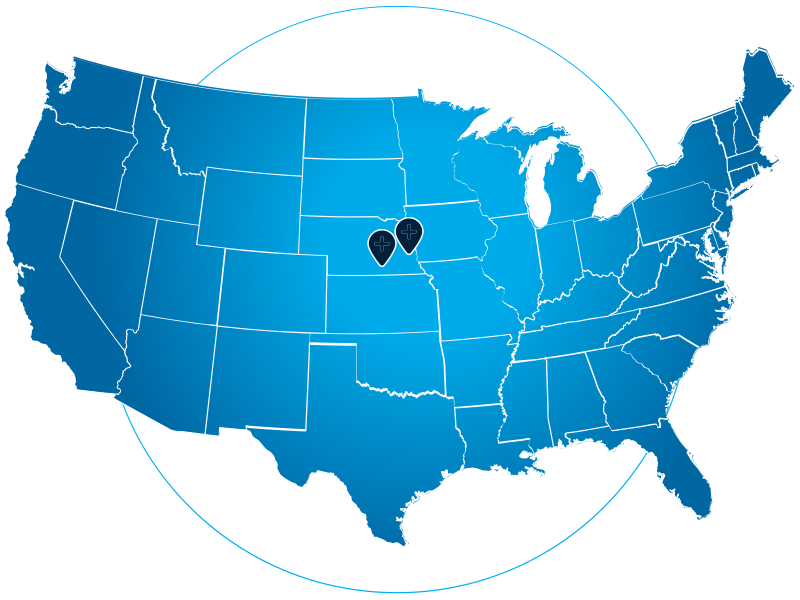
Our shop in Omaha builds box trucks for operations across eastern Nebraska and beyond — every build held to the same standard we run at home:
  • Omaha — trades and delivery operations throughout the metro and its commercial corridors
  • Lincoln — box trucks worth driving up the interstate for a proper build
  • Papillion — contractors running routes across Sarpy County
  • La Vista — service businesses in the heart of the metro corridor
  • Bellevue — crews covering the southeast metro
  • Elkhorn — companies growing with the west metro
  • Bennington — northwest metro operations
  • Nebraska City — southeast Nebraska businesses
  • Grand Island — central Nebraska operations
  • Kearney — companies bringing trucks in from the west
  • Kansas City, MO — regional operations that route through the metro
Box Truck Upfitting for Omaha, Lincoln, and the Surrounding Region Box Truck Upfitting for Omaha, Lincoln, and the Surrounding Region

Upfits That Pair Well With a Box Truck Build

Most operations run more than one kind of vehicle. These services extend the same discipline across the rest of your lineup:

Truck bed storage systems

Secure locking drawer systems, including TruckVault builds, that organize and protect what rides in your pickups. The same security thinking we build into boxes, applied to open beds.

Ladder racks

Steel and aluminum racks that move ladders and long material overhead on vans, trucks, and service vehicles. Racks free interior space for what genuinely belongs inside.

Steps and running boards

Non-slip access points that make climbing in and out of tall work vehicles safer all day. A small addition drivers appreciate at every single stop.

Vehicle partitions

Bulkheads that keep cargo, tools, and shifting loads out of the cab where your drivers sit. Protection that matters most when loads are heavy and stops are sudden.

Put a Real Workspace on the Road

Somewhere in Omaha right now, a crew is unloading half a box truck to find the one part they need. That is not a storage problem — it is a design problem, and it gets solved on paper before it gets solved with shelving. A purpose-built box truck upfit means the truck arrives at the job with everything findable, everything secured, and a workspace ready the moment the door rolls up. Crews feel the difference on the first route, and customers see it every time the door opens.

We would rather earn this work the honest way: look at your operation, tell you what we would build and why, and let the plan speak. Our builds combine proven commercial equipment with layout decisions drawn from how your crew actually works, and every install is backed after you drive away. Every recommendation is grounded in what your operation hauls, not what our shop wants to sell. If you are still comparing approaches, our upfitting FAQ answers the general questions owners ask before committing to a build.

One truck or the start of something bigger — either way, the process begins with a conversation, not a commitment. Tell us what the truck needs to do, and we will show you what the box can become when a Nebraska family shop builds it around your business. The truck is already in your fleet — the upfit is what makes it produce.

© Red Barn Media Group 2026