

White delivery van driving down a city street

3M Cooling Film — Omaha & Lincoln, NE

3M Cooling Film for Delivery and Service Fleets in Omaha & Lincoln

Request a cooling film quote Browse All Upfitting Services
Delivery driver at the wheel of a work van with packages on the passenger side

A van parked in a Nebraska summer sun turns into an oven, and your drivers climb back into it at every stop. We apply 3M™ Cooling Film from 3M to the roofs of delivery vans, box trucks, and service vehicles for fleets across Omaha and Lincoln. This highly reflective performance film reflects over 85% of solar radiation and, according to 3M, reduces interior vehicle temperatures by up to 10°F (5.5°C) — without drawing any power from the vehicle. The result is a more comfortable cab for your crew and less heat exposure for the cargo behind it. Request a cooling film quote or browse all of our upfitting services.

Why a Cooler Roof Changes the Workday

Summer heat costs a fleet more than comfort — it wears on drivers, slows routes, and bakes whatever rides in the back. Here is what cooling film changes:

Heat Stopped Where It Starts

The roof takes the full force of a Nebraska summer sun, and that heat radiates straight down into the cab and cargo area. 3M engineered this highly reflective film for the roof, where it reflects over 85% of solar radiation before it can build up inside. Stopping heat at the source beats fighting it after it is already in the vehicle.

Cooler Cabs for the People Driving Them

According to 3M, the film reduces interior vehicle temperatures by up to 10°F (5.5°C). For a driver climbing in and out of a van all afternoon, a cooler cab is a real difference in comfort and focus — and in how the day feels by the last stop.

Less Heat Exposure for Sensitive Cargo

Not everything you haul tolerates a hot cargo area. Reducing heat buildup at the roof helps limit heat exposure for temperature-sensitive cargo, which matters to delivery operations, service crews carrying heat-sensitive materials, and anyone whose load does not like baking in a parked van.

No Power Draw, Minimal Upkeep

The film works passively — no wiring, no batteries, and no draw on the vehicle's electrical system. Its durable coating resists dirt, chemicals, and wear in normal operating conditions, so sustaining performance takes minimal maintenance rather than another item on the service schedule.

Designed for Quick Installation

3M designed the film for quick installation, which keeps a working vehicle off its route for less time. For stop-and-go delivery fleets, a cooler vehicle also helps reduce heat-related slowdowns, which supports smoother routes through the hottest part of the year.

Film Work From a Team That Knows Vehicles

Applying film cleanly is precision work, and it runs in the family — our sister company, Revolution Wraps, is a vehicle wrap and graphics shop. The film itself is backed by a 3M manufacturer warranty, and our workmanship stands behind the application. Review how our warranty coverage works before you commit.
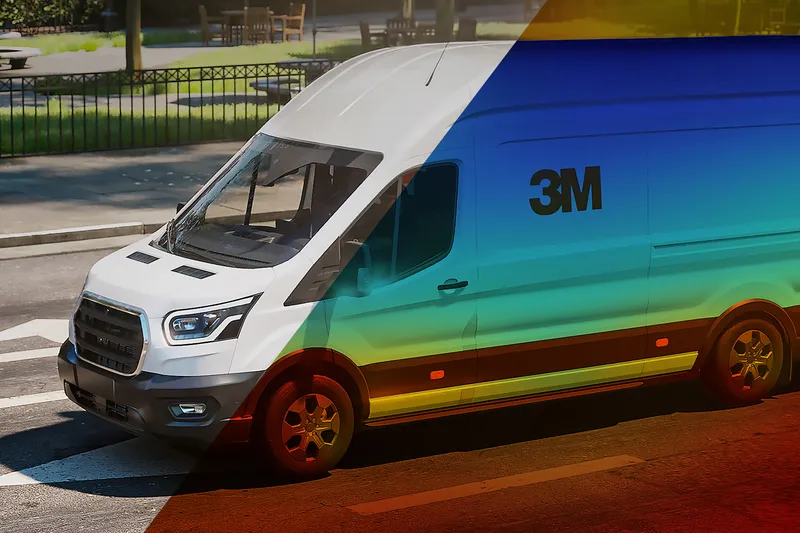
Delivery van shown with a heat-map overlay illustrating how 3M Cooling Film reduces heat inside the vehicle

Tell Us Which Vehicles Feel the Heat

The quote form asks for the vehicles you want to cool — year, make, model, and roof height — plus how they are used: delivery routes, job-site parking, or cargo that does not tolerate heat. That is enough for us to plan the application and flag any roof equipment that affects it. Cooling film pairs naturally with other work while the vehicle is in our shop, whether that is a standardized fleet upfitting program, a full box truck upfit, or LED cargo lighting for the early starts. Tell us the whole picture and we will plan it together.

Request a cooling film quote

How We Apply Cooling Film, Roof to Handoff

Every cooling film project follows the same sequence, because a reflective film only performs when it is applied to a clean, well-prepared surface. If upfitting is new territory, our guide to what vehicle upfitting involves is a useful first read.

1

Fleet and Route Review

We start with how your vehicles actually work in the heat: how long they sit in the sun, how often doors open, and what rides in the back.

Identify which vehicles spend the most time on sunny routes or parked outdoors

Note stop-and-go delivery patterns where cab heat adds up through the day

Ask what cargo is temperature-sensitive and how it is loaded

Discuss driver comfort complaints you are already hearing

Confirm whether one vehicle or a full fleet is in scope

Talk through what else the vehicles need while they are in the shop

2

Vehicle and Roof Assessment

The roof is the work surface, so we look at it closely before anything is quoted or scheduled.

Confirm the year, make, model, and roof height of each vehicle

Inspect the roof surface for damage, residue, or previous film

Note ladder racks, vents, antennas, and other roof-mounted equipment

Plan how the film will be laid out around those features

Flag anything that needs attention before application

Review the plan and the recommendation with you plainly

3

Surface Preparation

A film only performs as well as the surface under it. Prep is where a clean, lasting application is decided.

Wash and decontaminate the roof surface thoroughly

Remove residue that would interfere with adhesion

Protect surrounding areas and equipment during the work

Confirm the surface is clean and dry before application

Remove and reinstall roof equipment where the plan calls for it

Recheck the full surface before the film goes down

4

Cooling Film Application

We apply the film following 3M's guidelines, working carefully across the roof so it lays flat and finishes cleanly.

Measure and lay out the film for full roof coverage

Apply the film following the manufacturer's installation guidelines

Work edges and seams so they finish cleanly

Trim neatly around vents, antennas, and mounting points

Check for lift, bubbles, or gaps across the entire surface

Correct anything that does not meet our standard before moving on

5

Inspection and Handoff

We hand back a vehicle you know how to care for, with the details documented for your records.

Inspect the finished application in full with you

Review the simple care habits that keep the film performing

Hand over the product documentation for the installed film

Explain how the manufacturer warranty and our workmanship coverage work

Show how the film fits alongside our full lineup of upfitting services

Answer every question before the vehicle leaves the shop

Cooling Film Questions From Omaha & Lincoln Fleets

Have a general question about how upfitting projects work? Our vehicle upfitting FAQ covers the fundamentals.

3M states that the film reduces interior vehicle temperatures by up to 10°F (5.5°C). Your results depend on the vehicle, the weather, and how the van is used — a van parked in full sun all afternoon has more heat to shed than one that sits in the shade. We will not promise a number beyond what the manufacturer publishes, but we will explain where the film makes the biggest difference for your routes.

On the roof. The roof absorbs the most direct sunlight, so that is where 3M designed the film to work — reflecting solar radiation before heat builds up and radiates into the cab and cargo area. It is not a window tint and does not change the view from the driver's seat.

No. The film works passively by reflecting sunlight, so there is no wiring, no switch, and no draw on the vehicle's battery or electrical system. Once it is applied, it simply keeps working every time the vehicle is in the sun.

It can help. Reducing heat buildup at the roof limits heat exposure for temperature-sensitive cargo in the back. It is not a substitute for refrigeration where a load requires controlled temperatures, and we will be straightforward about that when we talk through what you haul.

Vehicles that spend long hours in the sun get the most from it — last-mile delivery vans, high-roof cargo vans, box trucks, and service vehicles that park outdoors on job sites. If your drivers are making frequent stops through the hottest part of a Nebraska summer, those vehicles are usually the first place to start.

Usually, yes. During the roof assessment we note ladder racks, vents, antennas, and anything else mounted up top, then plan the application around them. Where equipment needs to come off for a clean application, we tell you before the work is quoted so there are no surprises.

Very little is required. The film's durable coating resists dirt, chemicals, and wear in normal operating conditions, so routine vehicle washing is typically all it needs. At handoff we walk through the care habits that keep it performing and hand over the manufacturer's documentation.

Yes — the film is backed by a 3M manufacturer warranty, and our workmanship stands behind the application itself. We explain how both sides of that coverage work before you commit, and our warranty page covers how we handle workmanship concerns.

The film goes on the roof, so side and rear graphics are left alone. If you are also planning a wrap or new fleet graphics, that is work for our sister company, Revolution Wraps, and we can coordinate the timing so both projects fit together on the same vehicles.

Yes. Fleet work is planned so every vehicle gets the same application standard, and we schedule vehicles in groups that keep enough of your fleet on the road. Our fleet upfitting programs can fold cooling film into a broader standardized build if the vehicles need more than film.

Where Omaha and Lincoln Fleets Come to Beat the Heat

Cooling film is applied at our shop in Omaha, and vehicles arrive from across the metro and well beyond. The application standard is the same no matter where the route runs:

  • Omaha — home base, and where every cooling film application happens
  • Lincoln — delivery and service fleets working the capital city's summer routes
  • Papillion — vans and trucks running across southern Sarpy County
  • La Vista — last-mile and trade vehicles along a busy commercial corridor
  • Bellevue — southeast metro fleets that park in the open
  • Elkhorn — service vehicles working the fast-growing west metro
  • Bennington — northwest metro crews and their vans
  • Nebraska City — southeast Nebraska fleets that spend long days in the sun
  • Grand Island — central Nebraska routes where summer heat runs long
  • Kearney — vehicles further west that work outdoors all season
  • Kansas City, MO — regional fleets that route through our shop
Where Omaha and Lincoln fleets come for 3M Cooling Film Where Omaha and Lincoln fleets come for 3M Cooling Film

Keep Building While the Vehicle Is Here

A cooler roof is often one part of a better-equipped vehicle. These services pair naturally with a cooling film application:

Fleet upfitting programs

Standardize cooling film and the rest of the build across every vehicle, so each van leaves the shop with the same spec and the same finish.

Box truck upfitting

Large box bodies soak up heat in the sun. Pair a cooler roof with shelving, tie-downs, and a layout built around how your crew loads.

LED cargo lighting

Bright, efficient cargo-area lighting that makes early mornings and late deliveries easier to work, planned alongside the rest of the upfit.

Van liners

Floor, wall, and ceiling protection for the cargo area, so the inside of the van holds up as well as the roof does.

Cool Your Fleet in Omaha or Lincoln, NE

Every summer, the sun works on your vehicles all day long — heating the cab your drivers sit in, the cargo area they load from, and whatever rides in the back. 3M™ Cooling Film answers that at the roof, reflecting heat before it builds up, with no power draw and minimal upkeep once it is applied.

What you get from us is a careful application, not a roll of film. We review how your vehicles work, assess each roof, prepare the surface properly, and apply the film following 3M's guidelines. Then we hand it back with a walkthrough and the documentation. Learn more about our family-owned shop and our sister company, Revolution Wraps.

The next step is simple: tell us which vehicles you want cooler and how they are used. We will come back with a plan explained plainly, for one van or a whole fleet — and have your drivers ready for the next heat wave.

© Red Barn Media Group 2026