
Buyer's Guide

Van Shelving, Done Right: Choosing a System That Fits the Way You Work

Ask our shelving team
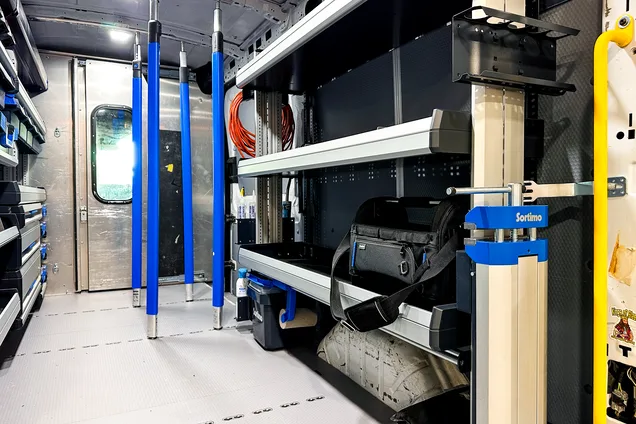
Sortimo van shelving system with organized parts bins installed in a work van

Shelving is the single most consequential decision in a van upfit. Get it right and every workday runs smoother; get it wrong and you'll fight your own vehicle for years. Yet most buyers choose shelving the way they'd buy a bookcase — by looking at pictures. This guide lays out the process our Omaha team walks through with every customer: an honest needs assessment, layout thinking, the aluminum-versus-steel question, and why modularity and professional installation deserve more weight than they usually get. Want a second opinion on a system you're considering? Ask our shelving team before you commit.

Begin With the Work, Not the Hardware

The best shelving system for a plumber is a poor fit for a locksmith, and both would frustrate a delivery driver. Before comparing products, get specific about the job the van actually does:

  • Inventory the cargo — List what genuinely rides in the van: tools, parts, cases, spools, long stock, ladders. Note what gets used at every stop versus once a week.
  • Watch the workflow — Where do you park relative to the job? Do you work out of the back doors, the side door, or both? Which items must be reachable without climbing in?
  • Count the users — A van driven by one careful owner can be organized differently than one shared across a rotating crew.
  • Think ahead — Will the business add services, take on bigger jobs, or grow into a second van? The answer shapes how flexible the system should be.

Write this down before you look at a single catalog page. Every decision that follows — layout, material, modularity — flows from it. Our van shelving systems page shows how we translate this assessment into a concrete configuration.

Layout: Think in Zones Before Shelves

A good layout assigns every part of the cargo area a purpose, then chooses hardware to serve it:

  • High-frequency zone — Items used at every stop belong at the doors, at waist height, reachable without entering the van.
  • Heavy zone — Weight rides low and forward, keeping the center of gravity down and the van stable.
  • Small-parts zone — Fasteners, fittings, and connectors live in drawers or removable bins, not loose on shelves.
  • Long-stock zone — Conduit, pipe, and trim need a dedicated channel — or a rooftop solution like our ladder rack installations, which free interior wall space entirely.
  • Walkway — Leave room to move. A van you can't step into slows every job.

Layout also interacts with the rest of the upfit. A vehicle partition defines the front boundary of your shelving run, and floor and wall van liners should go in before shelving mounts over them. If those are on your list, plan them together — our partition options and liner installations pages explain how they fit into the sequence.

Aluminum vs. Steel: An Honest Comparison

Both materials build excellent shelving, and both appear across the Sortimo and Holman lines we carry. The right answer depends on your priorities:

Where aluminum shines

Aluminum's calling card is low weight. A lighter shelving package preserves more of the van's payload for tools and parts and puts less strain on the vehicle over years of service. It also resists corrosion naturally — worth considering for crews that haul wet gear or work through Nebraska winters with salty, slushy boots.

Where steel shines

Steel is the traditional workhorse: rigid, tough, and forgiving of abuse. Trades that load heavy iron, drop tools, and slide loaded crates across shelves lean toward steel for durability. Coated finishes handle corrosion well in normal service.

How to decide

Weigh three questions: How heavy is your daily load? How rough is your crew on equipment? How much payload margin does your van have? There's no universal winner — which is exactly why the material decision belongs in a conversation about your work, not on a spec-sheet skim.

Many upfits end up mixing materials sensibly: aluminum shelving structure to protect payload, with steel reinforcement where the heaviest abuse lands. An experienced installer will tell you where each material earns its place in your specific van rather than selling you a single-material answer.

Modularity: The Feature You'll Appreciate in Year Three

Fixed shelving meets today's needs. Modular systems — the approach behind the Sortimo and Holman platforms — meet today's needs and next year's:

  • Reconfigurable — Shelves, drawers, and dividers move as your inventory changes, without drilling new holes.
  • Case and bin integration — Removable cases let techs carry organized parts from van to jobsite and back, instead of pocketing loose fittings.
  • Expandable — Add components over time rather than buying everything on day one.
  • Fleet-friendly — Modular platforms make it practical to repeat one proven layout across many vehicles, the foundation of the standardization strategy we cover in our fleet upfitting guide.

If your business changes at all — and whose doesn't? — modularity is the difference between adapting your van and replacing its interior.

Why Professional Installation Is Part of the Choice

The best shelving system, badly mounted, is worse than a mediocre one installed correctly. Shelving must stay anchored under hard braking with a full working load aboard, which makes installation a safety decision, not a convenience:

  • Structural mounting — Professional installers anchor to the van's proper structural points, not just through the closest panel.
  • Hazard awareness — Wiring harnesses, fuel lines, and airbag components hide behind van walls exactly where a misplaced screw would find them.
  • Sequencing — Liners, partitions, shelving, and accessories go in the right order the first time.
  • Accountability — A professional install comes with a name behind it. Ours is backed by the workmanship standards described on our warranties page.

Installation quality is also where a shelving purchase becomes an upfitting relationship — the installer who planned your first van can repeat and refine that layout for your next one.

Van Shelving Questions Buyers Ask

Less than most first-time buyers assume. The goal is a home for everything you genuinely carry, not covered walls. Overbuilt shelving wastes payload and floor space, so inventory what rides in the van daily, then size the system around it — leaving open floor for bulky cargo and room to work.

Fixed shelving is welded or bolted into one permanent arrangement. Modular systems are built from interchangeable components — shelves, drawers, bins, and cases — that reposition and expand without rebuilding the interior. Modular costs its flexibility premium once; fixed shelving charges you every time your needs change.

Heavy use argues both ways: steel absorbs abuse and point loads well, while aluminum preserves payload when the cargo itself is heavy. Crews hauling dense material often pick aluminum shelving so more capacity goes to inventory; crews rough on equipment lean steel. Your load, habits, and van determine the winner.

Often, yes — one of modularity's quiet advantages. Quality modular systems can be uninstalled and refitted to a replacement vehicle, though mounting hardware and layout may need adjustment for the new body. If reuse matters to you, say so during planning; it influences which system and mounting approach we recommend.

Drawers and removable bins win for small parts. Open shelving lets fittings migrate, mix, and vanish over washboard roads, while divided drawers keep every SKU separated and visible. Save open shelves for cases, larger tools, and items you grab whole — and let anything smaller than a fist live in a drawer.

Every pound of shelving comes out of available payload, yes — which is why material choice matters and why overbuilding hurts. A well-designed system offsets its weight by organizing the load, eliminating duplicate stock, and ending the "carry everything just in case" habit. Most crews net out carrying smarter, not less.

Turn the Checklist Into a Configured Van

You now have the framework: assess the work, zone the layout, weigh aluminum against steel, favor modularity, and treat installation as part of the product. What remains is applying it to your actual van, your actual trade, and your actual inventory — and that's a conversation, not an article. It's also worth browsing the rest of our upfitting blog if you're still mapping the bigger picture.

Our Omaha team configures and installs Sortimo and Holman shelving for trades and fleets across eastern Nebraska — one specialty within our complete upfitting services — and every project follows the same process this guide describes. Bring us your list — we'll help you turn it into a van that works as hard as you do.

© Red Barn Media Group 2026