
Fleet Risk Management
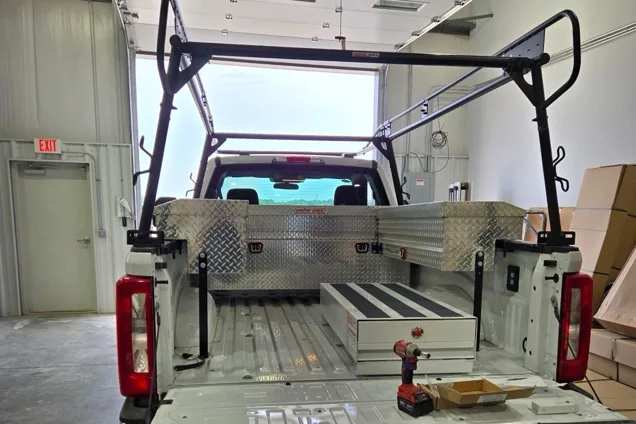
While we can appreciate the idea of saving money on a good DIY project, installing your own upfitting without professionals is a dangerous gamble that puts your fleet at risk of voided warranties, liabilities, damage, and downtime. It's important to consult a certified professional when considering upfitting to ensure the project is installed safely, in compliance with industry standards, and efficiently, so your vehicle is back on the road in no time. Our Omaha team put together this guide to the risks we see most often and what a professional fleet upfitting install does differently. Ready to talk through your fleet? Request a fleet consultation.
One of the most common reasons a fleet may consider DIY upfitting versus consulting professionals is cost. While completing the upfitting yourself may save upfront costs, it can leave you with high liability that turns into costly problems or injuries down the road.
Others may have someone in mind on their existing payroll who's handy. While that can be an asset in other ways, many insurers won't cover damages or injuries due to installations done by individuals without a license or proper certifications.
When installing upfitting, it's important to understand how the vehicle is built and where wiring or electrical components may be present. Drilling or mounting without that knowledge can lead to improper fusing, electrical issues, fire hazards, or damage to the vehicle's body. The stakes climb with powered upfits like LED lighting and inverters, where a wiring mistake can take the whole vehicle down.
Additionally, areas left unsealed can begin to collect moisture, leading to rust and corrosion across the body panels or floorboards.
Manufacturers can deny warranty claims for damage caused by self-installed upfitting. It's important to check your policy for coverage of aftermarket equipment.
When you consult a professional for upfitting, they understand the safe areas to drill and where to avoid. They take weight distribution into consideration to ensure the vehicle is not overloaded or worn down by uneven loading. Professional work also comes with its own protection: every install we perform is backed by warranty-backed workmanship on top of the manufacturer warranties that come with the equipment.
If the vehicle is being leased, your leasing company likely needs to approve any upfitting prior to installation. Many will not approve the installation unless it is done by a professional.
When you make the decision to install upfitting yourself without the proper training and certifications, you take on the liability for the installation.
Check whether your commercial auto policy covers aftermarket equipment installed by non-certified personnel. If the self-installed upfitting causes damage to the vehicle, damage to another vehicle, or injuries to one of your employees, you may be held liable.
Though many who are tempted to install upfitting themselves see it as a way to save time and money, there are often unexpected costs like vehicle downtime, tools, and rework that come along with the installation.
While upfitting may seem like a simple click, order, install process, you need to ensure you have the space and the correct equipment to do the job, and somewhere to store the delivered parts prior to installation.
If the job isn't done correctly the first time, fixes and rework may be necessary, leading to even more downtime for the vehicle and more cost to your business.
All of a sudden the costs start to add up quickly, and those savings aren't looking so big anymore. A professional takes the hidden costs and coordination off your plate.
Upfitting a single vehicle yourself is one thing (though still not recommended). Installing upfitting for an entire fleet yourself is a whole other animal.
A certified professional has experience solving upfit needs just like yours and can help you maximize the space and efficiency of your fleet vehicle with a customized upfitting solution, then scale it across the entire fleet.
We understand how important consistency is to the efficiency and profitability of a fleet. When you bring a vehicle to a true professional, you can expect the exact same consistent results every single time. We also understand how important it is for the vehicle to get back into commission, and we prioritize doing the installation correctly and efficiently the first time to minimize downtime.
Even more? A professional can work with you to phase vehicles through upfitting on a timeline that makes sense for your business and budget. With a team of professionals rather than doing it yourself, you get guaranteed consistent results across your fleet. We make the full case for matching builds in our guide to fleet upfitting standardization, and we deliver those programs through our fleet upfitting service.
It's not uncommon for vehicles to be swapped in and out over time within a fleet.
Causing damage to the vehicle by attempting to install your own upfitting can result in costs down the road to repair those areas and make the vehicle marketable for resale.
Potential buyers may be risk-averse about taking on the liability if any of the upfitting fails since it wasn't professionally installed, lowering your pool of interested buyers.
In short, professional installation gives fleets:
If you're still weighing which questions to ask an upfitter first, our frequently asked questions page covers the process from consultation to install, and our full lineup of upfitting services shows what a professional build can include.

© Red Barn Media Group 2026